

Contemporary Restoration of a Rural Property in Spoleto
Renovation, expansion and landscape design of a historic Umbrian estate
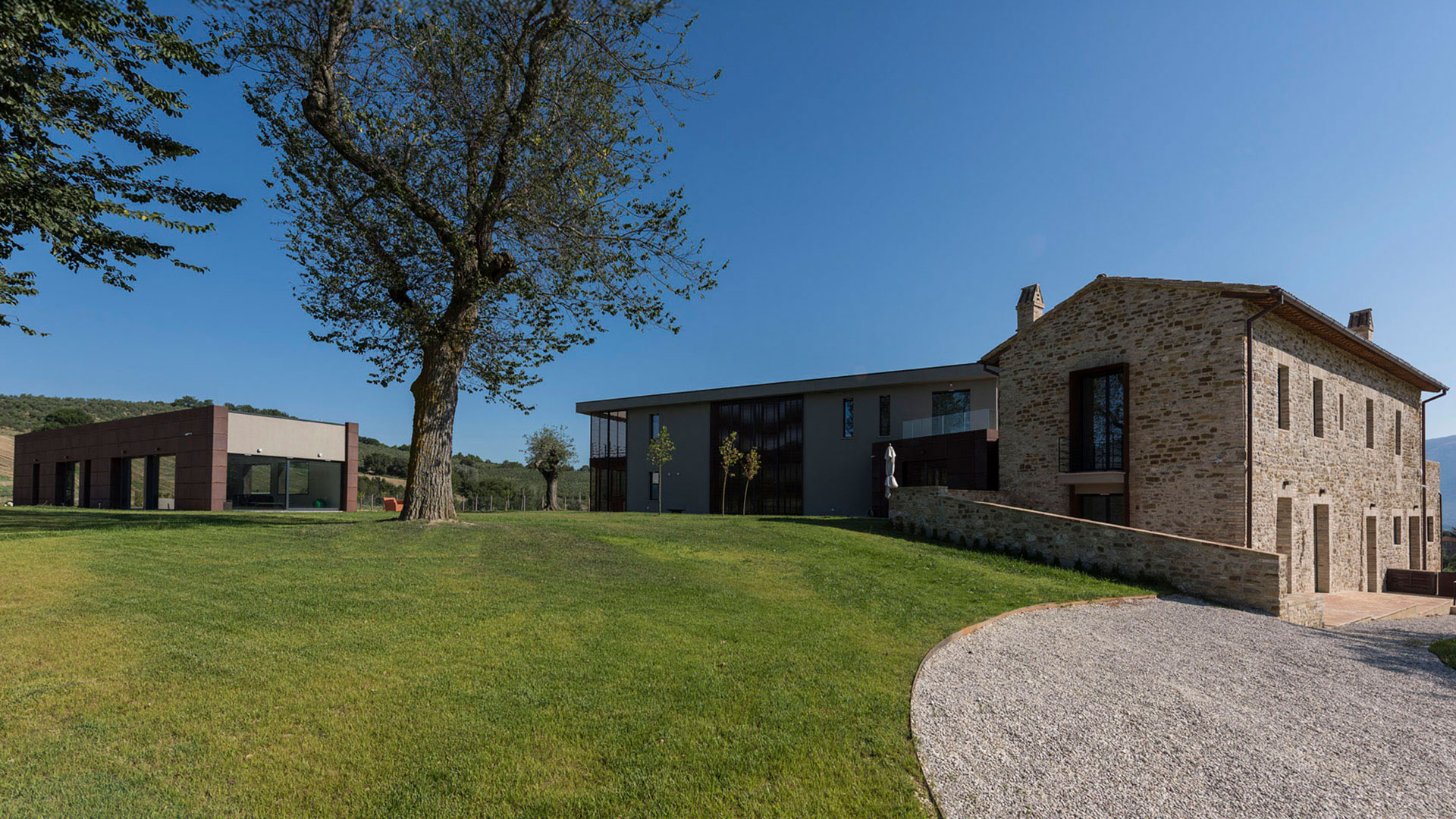
Nestled in the hills outside Spoleto, Casa_SM is a complete transformation of a group of rural buildings that had fallen into serious neglect. The project reimagines an Umbrian farmhouse from the 1930s and its post-war additions, blending respectful restoration with refined contemporary architecture. The result is a harmonious residential complex where historic character and modern comfort coexist seamlessly.
Restoring the Essence of an Umbrian Farmhouse
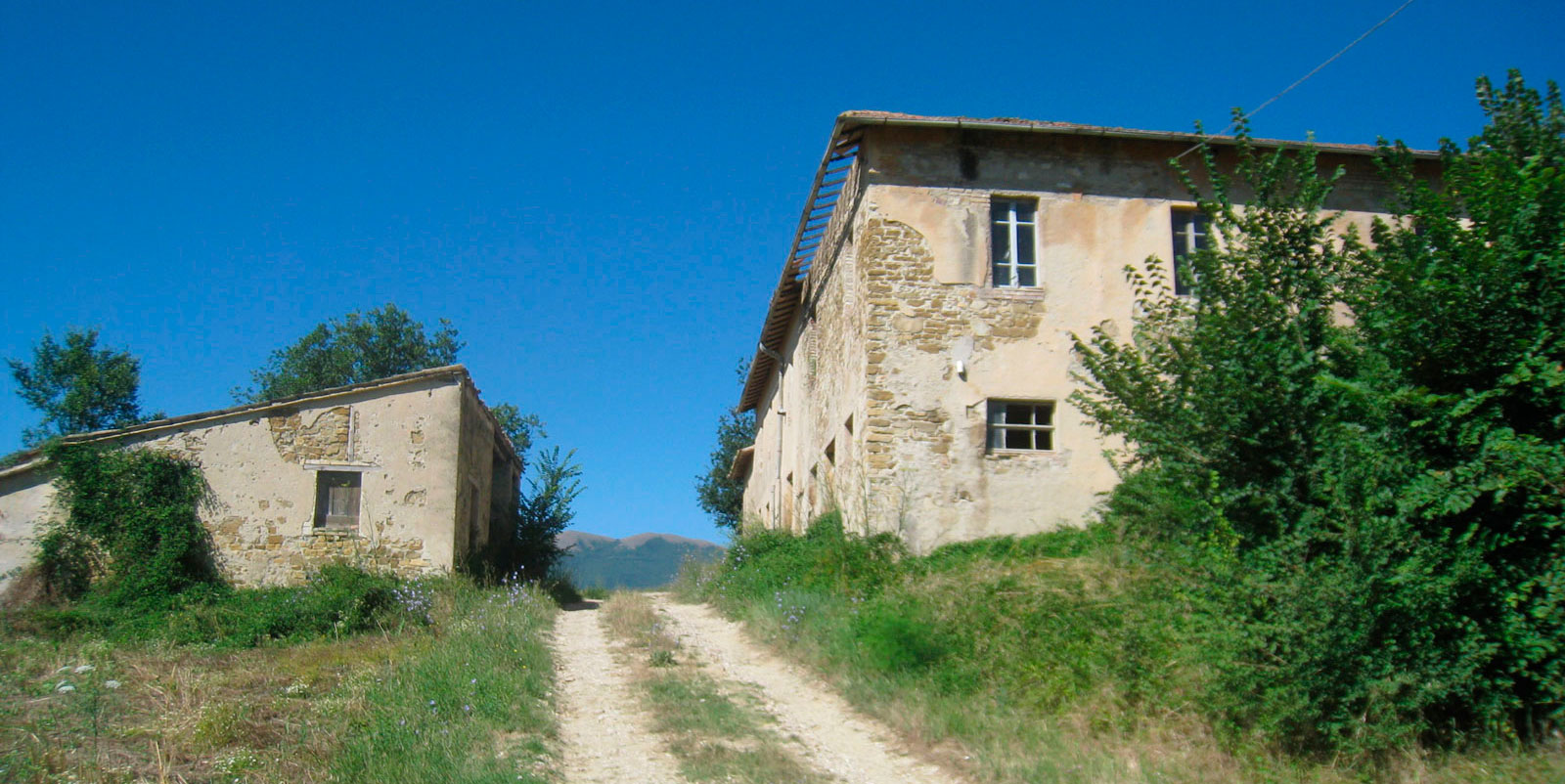
The main house, originally built in the 1930s and altered in the 1950s, had lost much of its rural identity. The project began with a careful removal of all improper mid-century additions, restoring the building to its original footprint and reviving its authentic proportions.
The new volumes are connected to the restored farmhouse by a transparent glazed element, creating a light-filled transition between old and new. This link leads to the new kitchen and dining area, clad in cor-ten steel, which becomes a recurring material throughout the entire property as a subtle sign of continuity.
An elongated, slightly 30°-inclined volume extends from the kitchen. It hosts the living room and studio on the lower level, while the upper floor accommodates the bedrooms, each enjoying wide south-facing views of the Umbrian countryside.
Facades, Light, and a Dialogue with the Landscape
New façades are finished in a refined grey mud-plaster, a tone chosen to integrate naturally with the earth and stone of the surrounding terrain.
• The north side is intentionally introverted, with narrow openings.
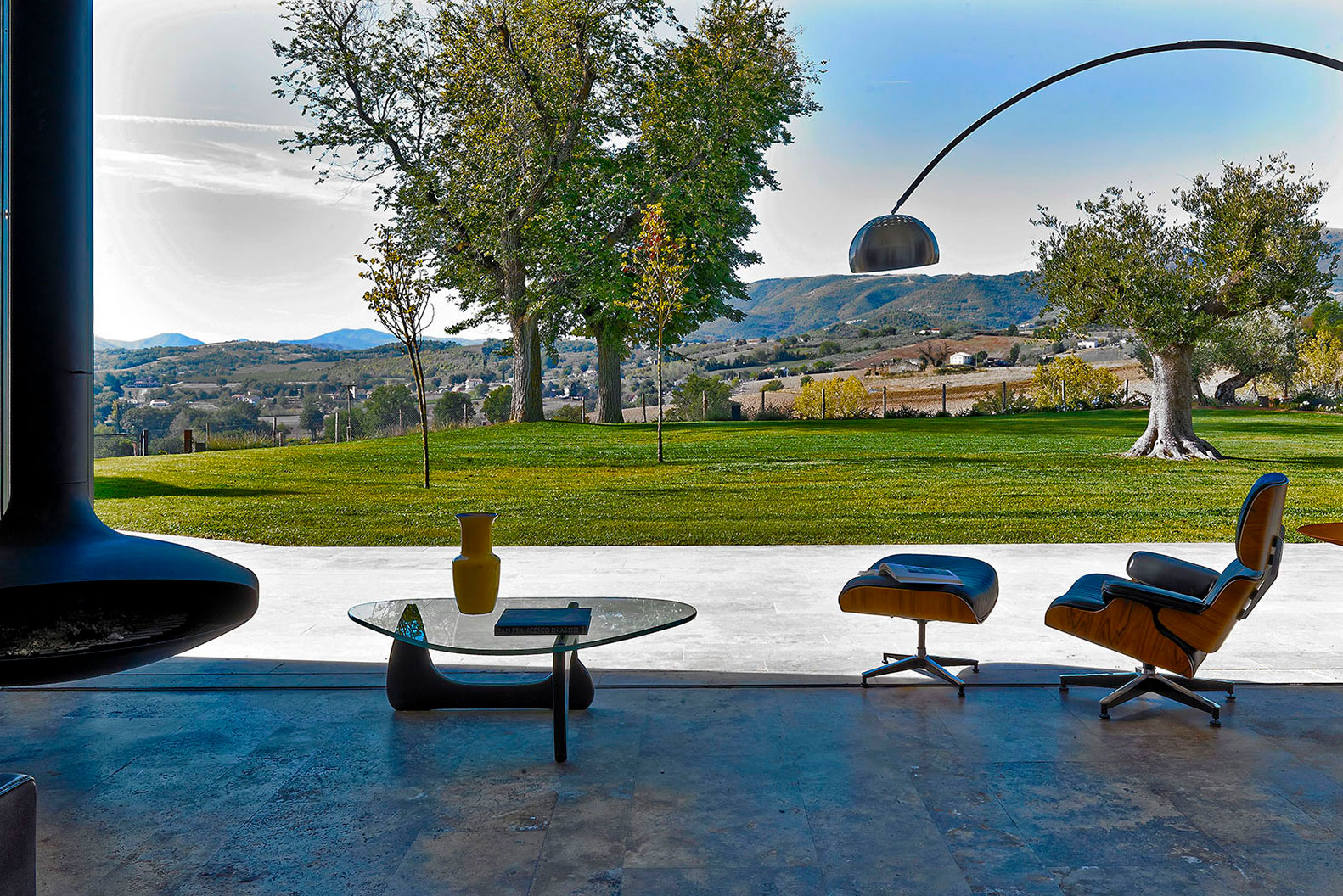
• The south side opens dramatically toward the garden with a 6-meter-wide aperture connecting the living area to the outdoors.
The lower-level windows slide completely into the masonry, while tall timber shutters with horizontal slats provide shade and privacy when needed.
The entire design aims to erase the threshold between indoor and outdoor space, embracing the Umbrian landscape as an essential part of daily life.
Rebuilding the Barn and Creating a Contemporary Annex
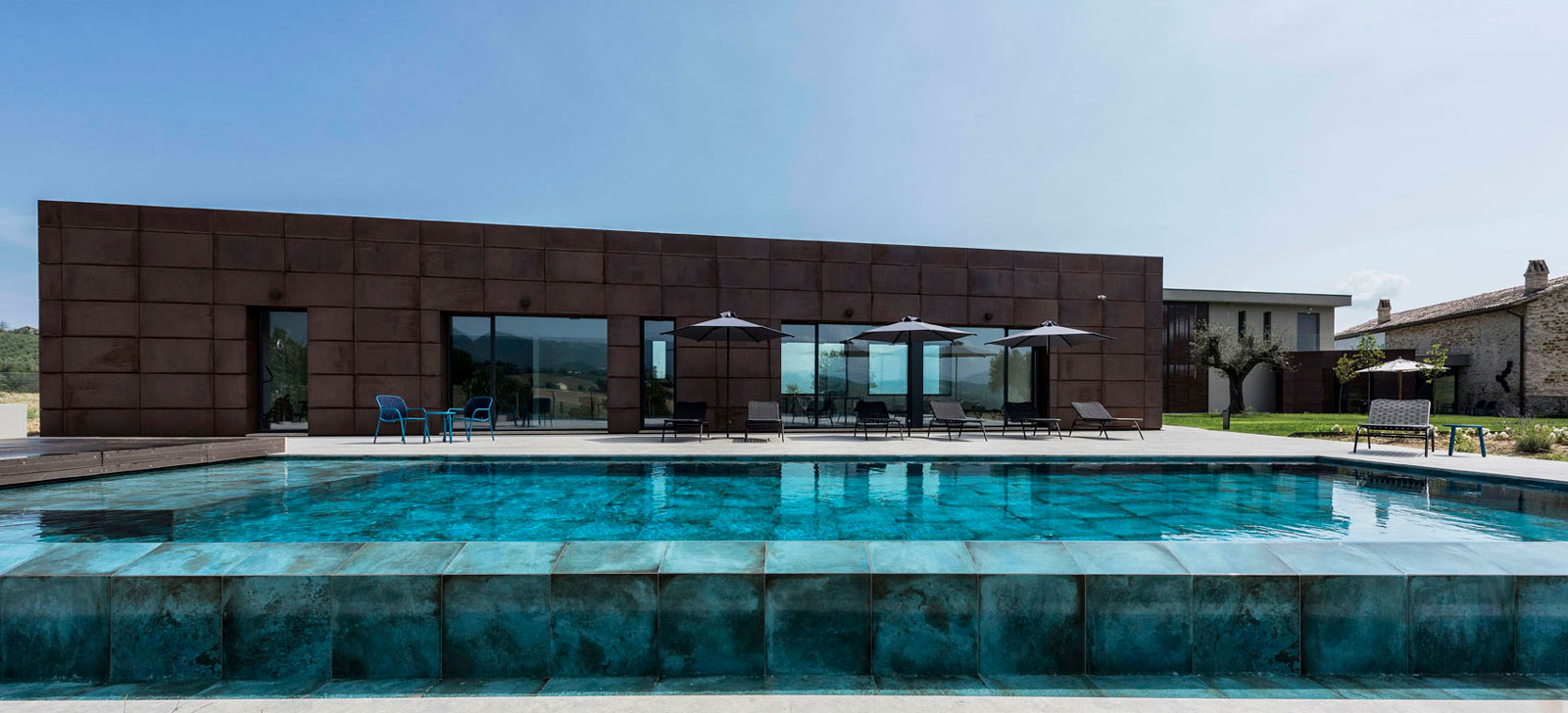
The existing barn, structurally compromised, was demolished and rebuilt parallel to the main building. The new volume features:
• Cor-ten cladding on the long façades
• Fully glazed short ends
• A composition of solids and voids facing the infinity pool and the newly planted vineyard
The pool itself is lined with emerald-green porcelain tiles that echo the tones of the surrounding hills.
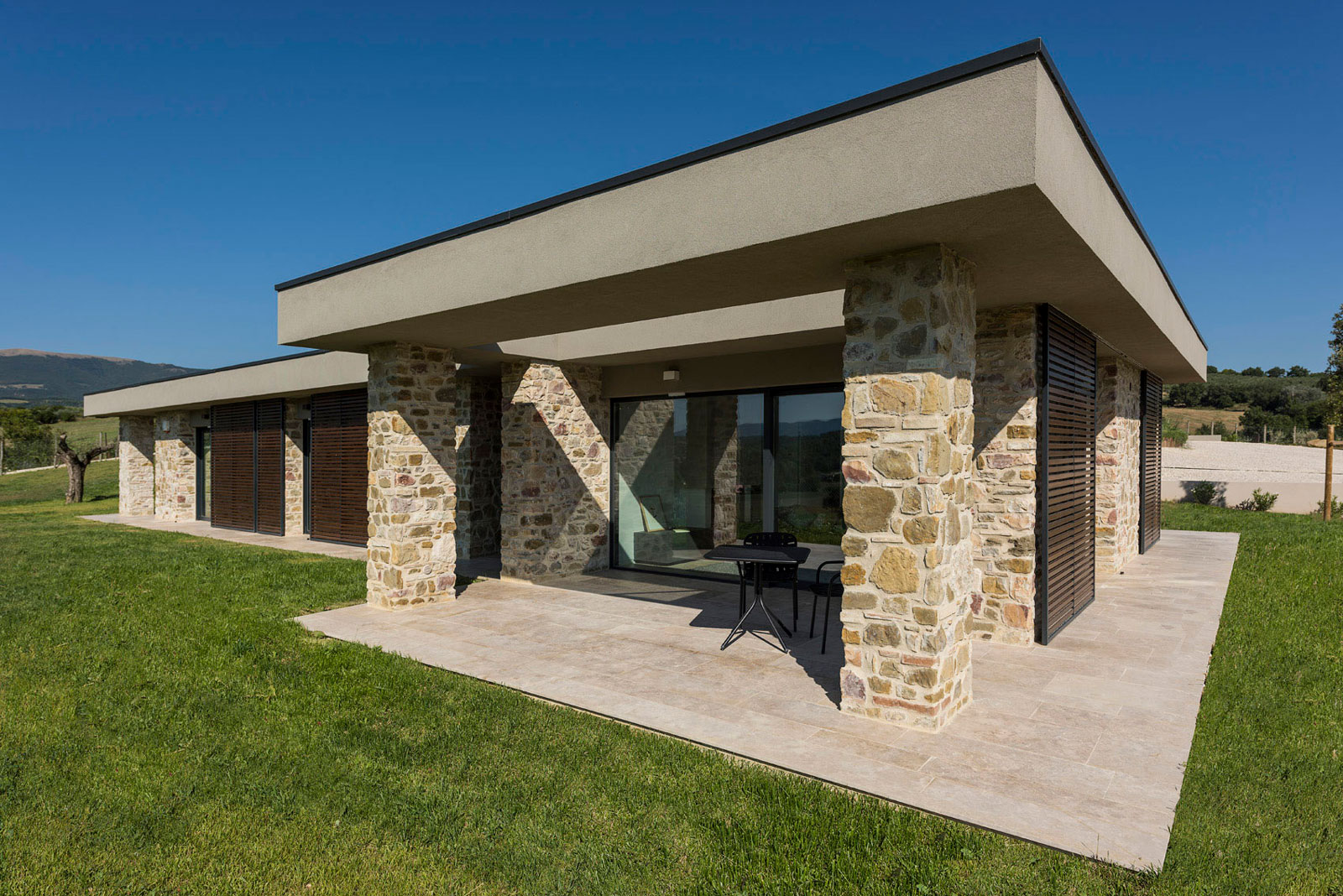
In the lower part of the property, another outbuilding was demolished and replaced with a minimal, flat-roofed annex designed to blend unobtrusively into the olive grove.
Its façades alternate between full glazing in the living spaces and recycled stone masonry, with sliding shutters that align perfectly with the stone walls when open.
The central bathroom volume—linking the two independent apartments—is finished in cor-ten, echoing the material used in the main compound.
Materials & Interiors
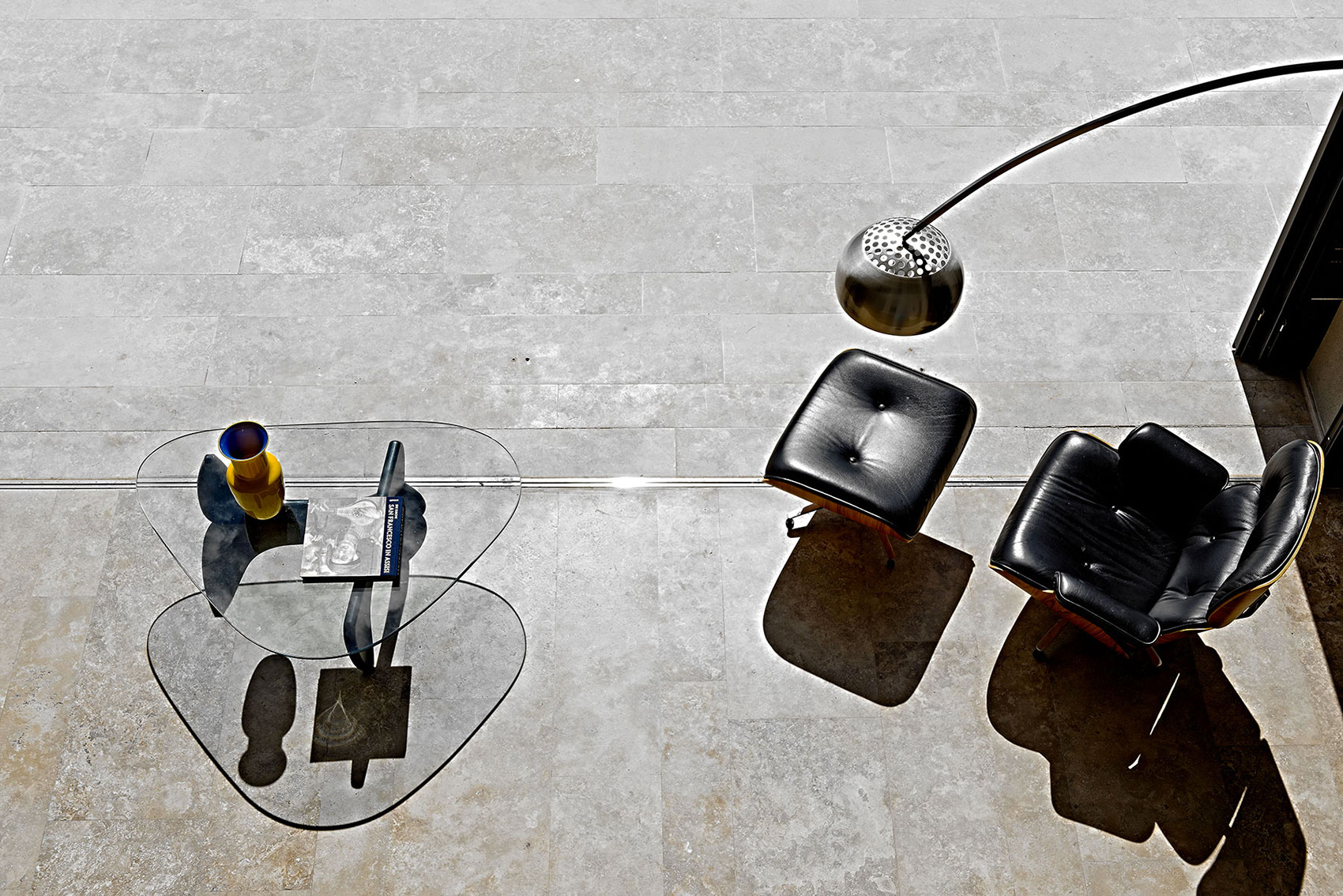
To strengthen continuity between inside and outside, the same travertine flooring used outdoors extends throughout the interior living spaces.
Bedrooms feature heat-treated oak planks, while bathrooms are finished in porcelain stoneware or travertine.
The interior style is a curated balance of contemporary design pieces and vintage furnishings from the 1950s and 60s. Lighting is discreet and minimal, relying mostly on LED spots with a few select design elements as accents.
Ecological and Energy-Efficient Design
Significant attention was dedicated to sustainability, with a complete energy strategy integrated into the project. A 20 kW photovoltaic system powers two heat pumps, while solar thermal panels provide hot water and help extend the swimming pool’s usable season. The property also includes a rainwater harvesting system used for irrigation, and all heating and electrical installations were designed to ensure high efficiency and a minimal environmental footprint.
Landscape as Architecture
Over 500 olive trees were planted across the estate, together with an 11,000 m² vineyard on the southern slope. Along the access paths, fifteen cypresses were arranged in small, irregular groups, while sixty oaks and pyramidal hornbeams enrich the surrounding greenery. A mixed-species hedge of about 700 plants defines the eastern boundary, and additional trees and shrubs have been carefully positioned to integrate the new architecture seamlessly into the Umbrian countryside.
The landscape design reinforces the character of this Umbrian property, ensuring that the new buildings feel deeply rooted in their environment.
A Contemporary Interpretation of Rural Umbrian Living
Casa_SM is not just a renovation—it is a complete reimagining of what a rural property in Umbria can become. By combining historic preservation, modern architectural language, and sustainable design, the project creates a timeless home that honors the past while embracing the future.