
casa_al
bastia umbra (pg) – 2017
photo: michele biancucci – studio daido
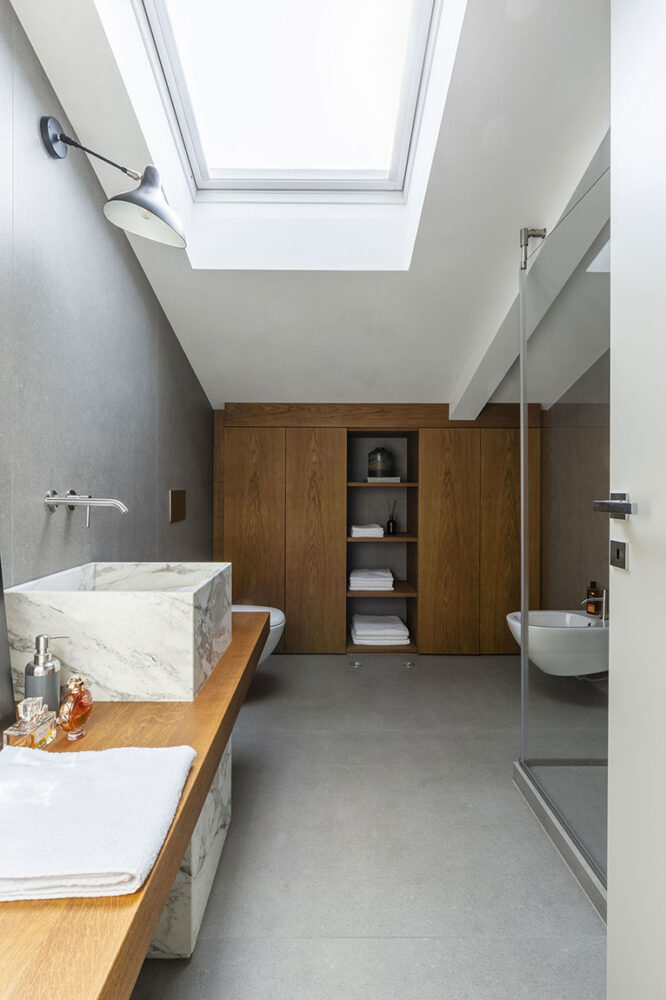
The project has completely transformed an attic located in a 20th-century period building in Bastia Umbria, near Perugia, currently owned by a well known fashion designer.
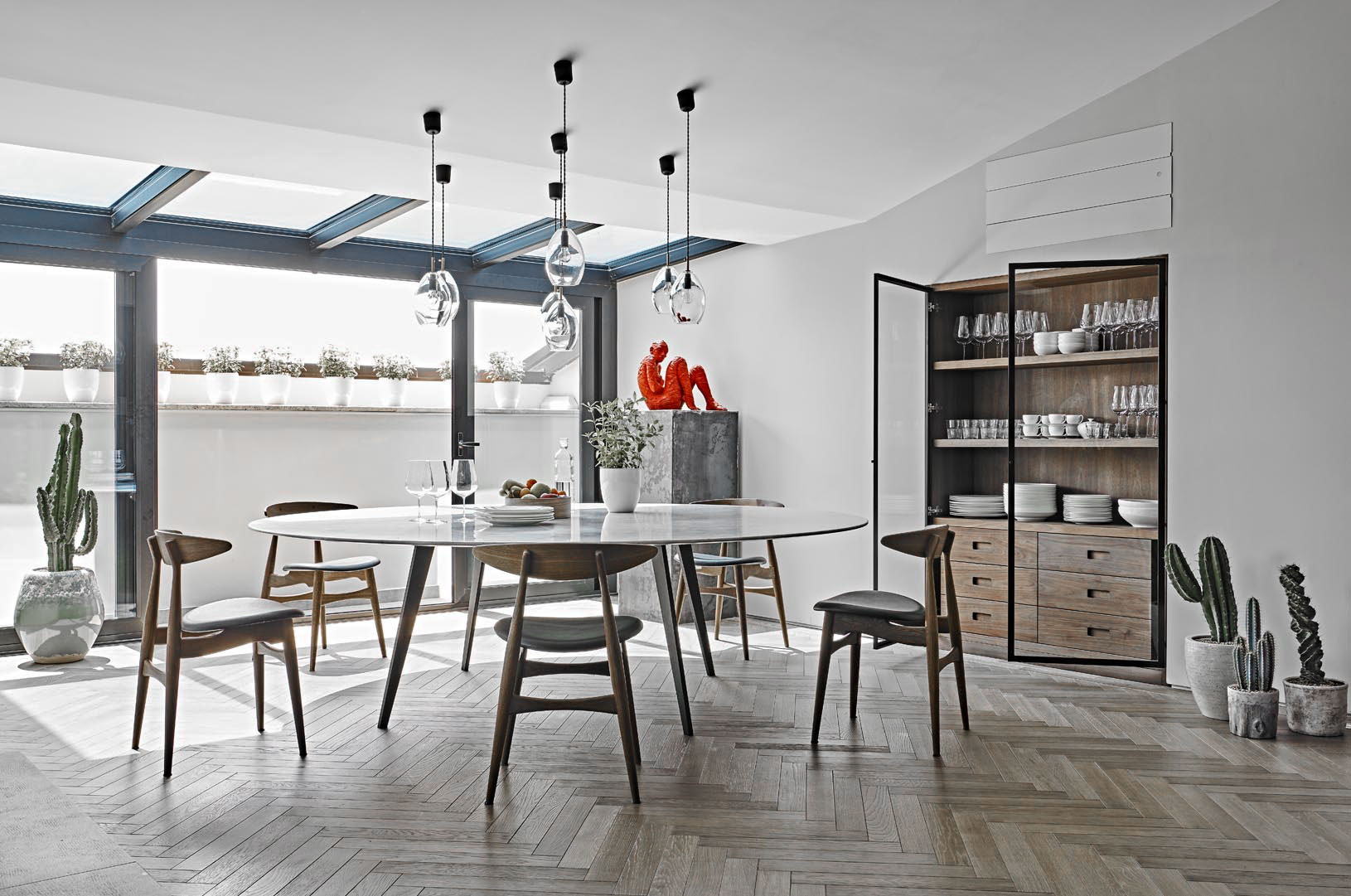
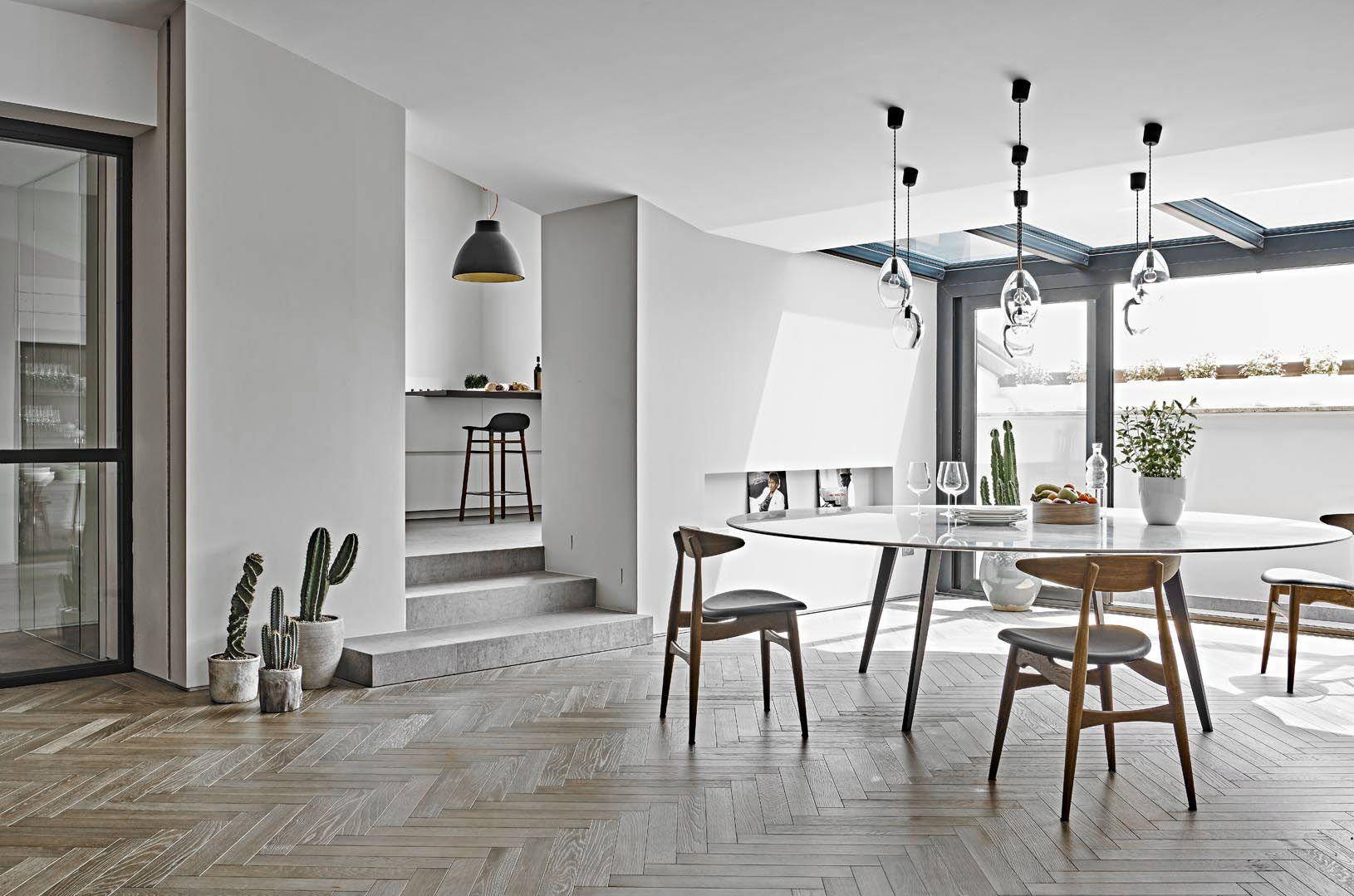
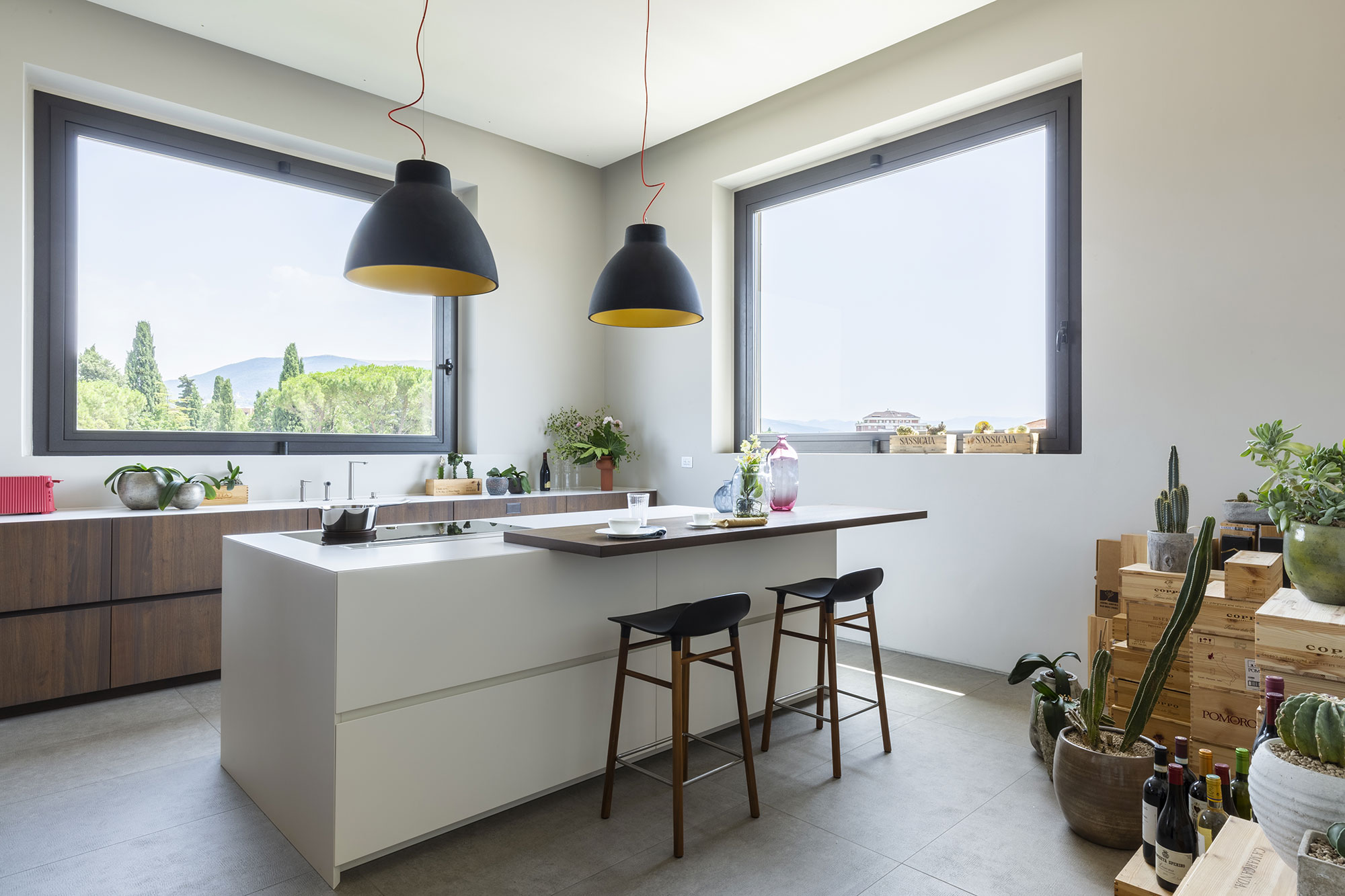
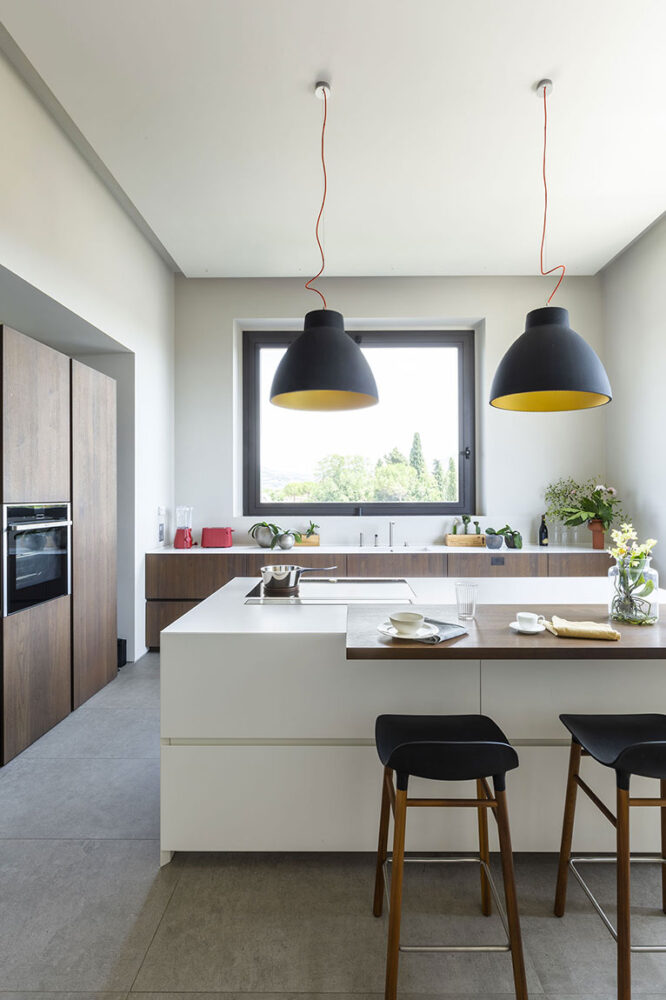
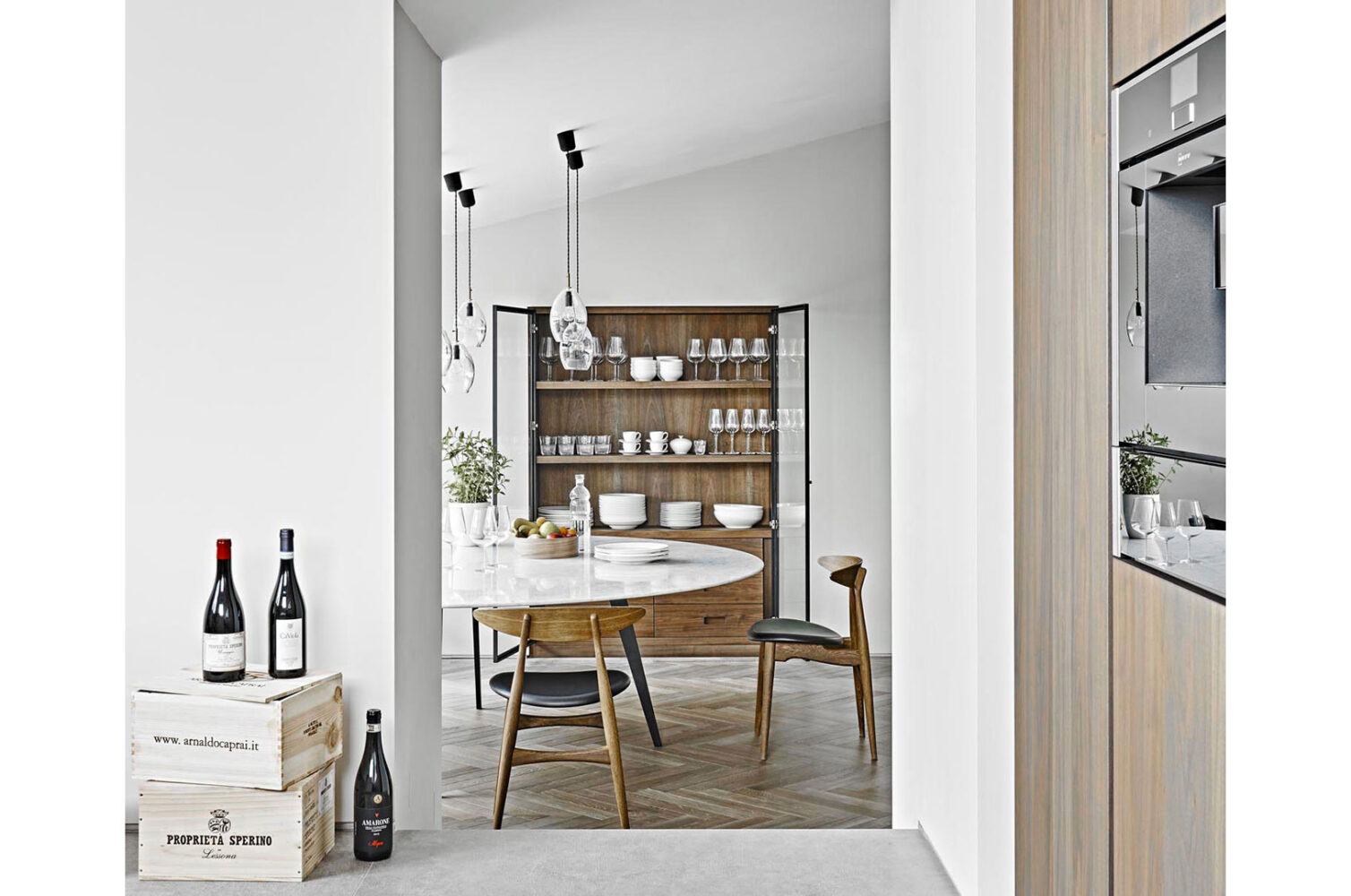
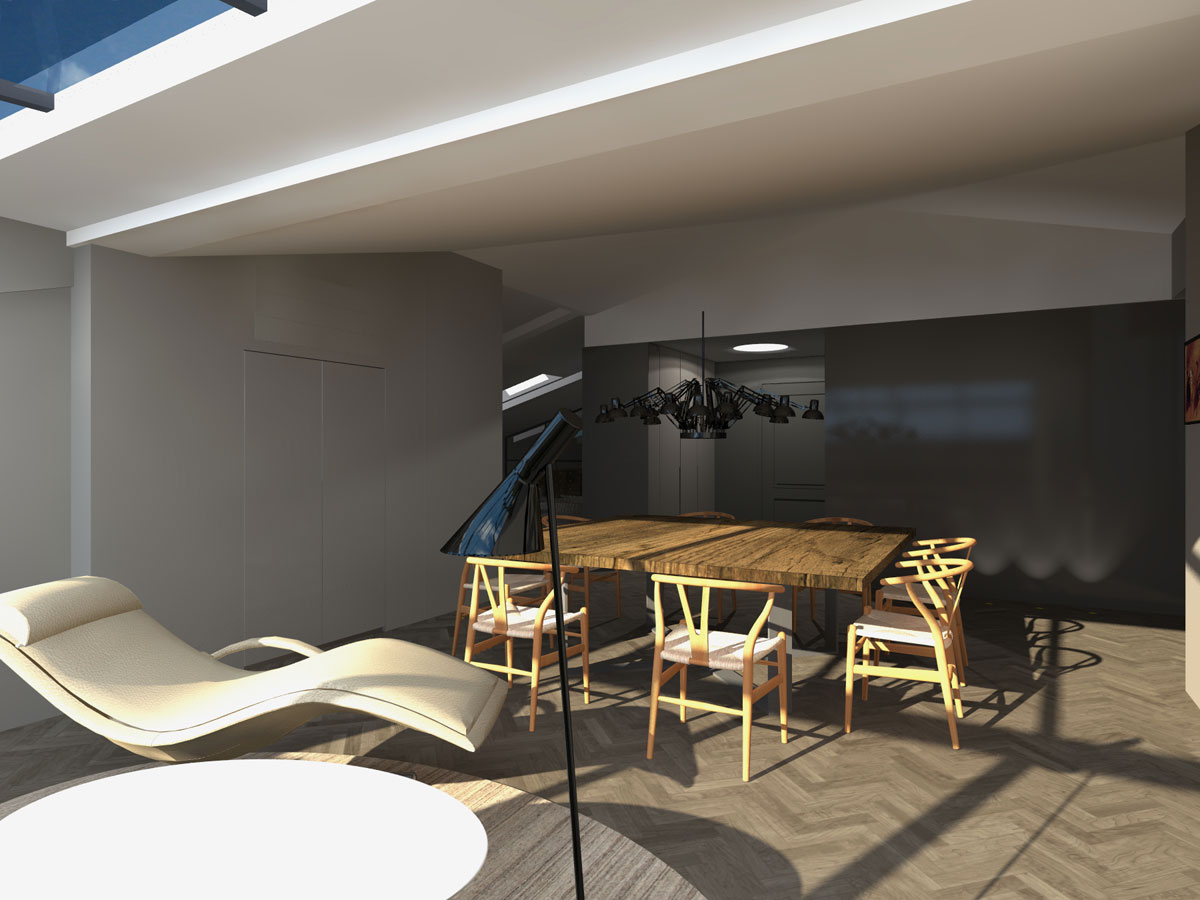
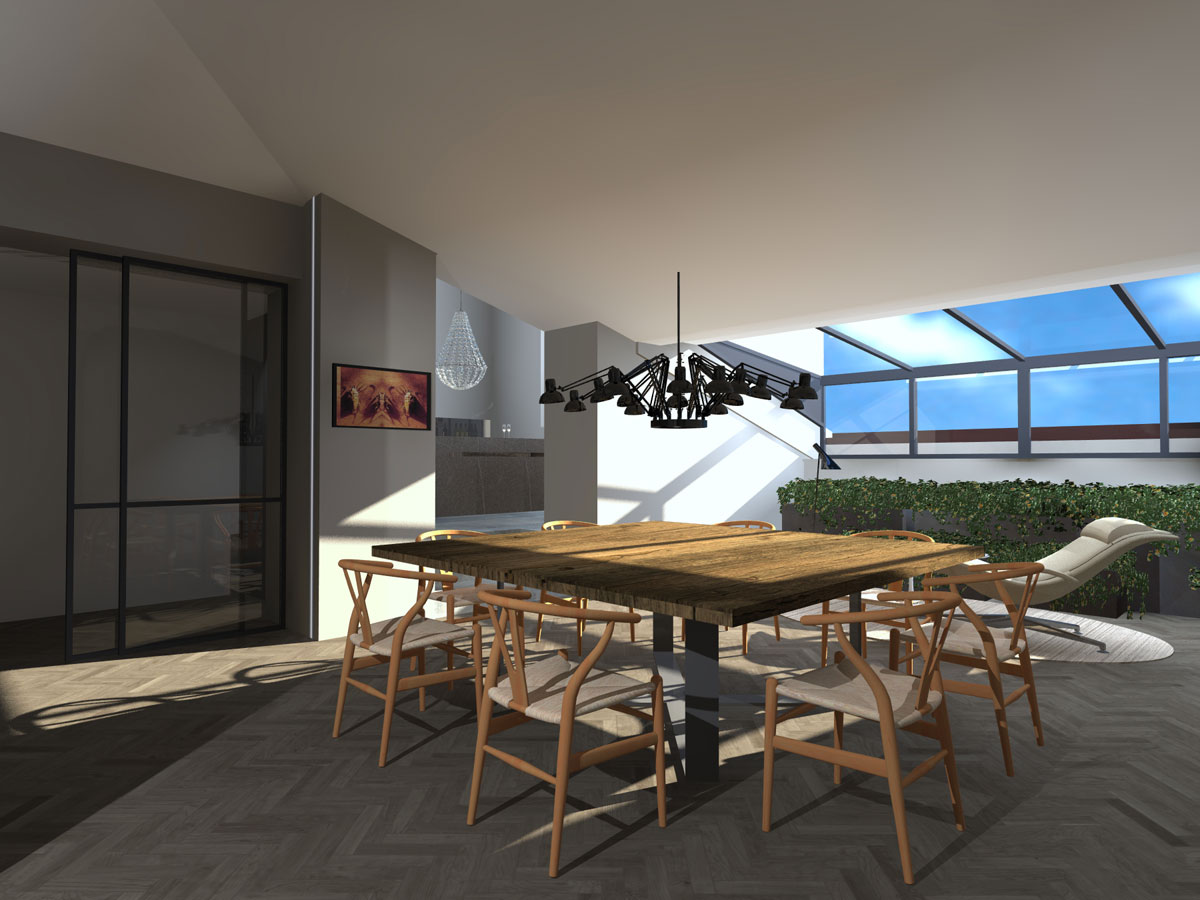
The horseshoe-shaped plant lays out around its central body, which includes the hallway and the turret, the latter being the only area devoid of a mansard roof. The intended original design was to create wide and fluid living areas as well as ensure proper light and air circulation. Both results have been successfully achieved by positioning the kitchen within the turret, from which, thanks to two large windows, a splendid view of the old town and the Umbrian hills, along with the dining room located in the adjacent solar conservatory, can be enjoyed.
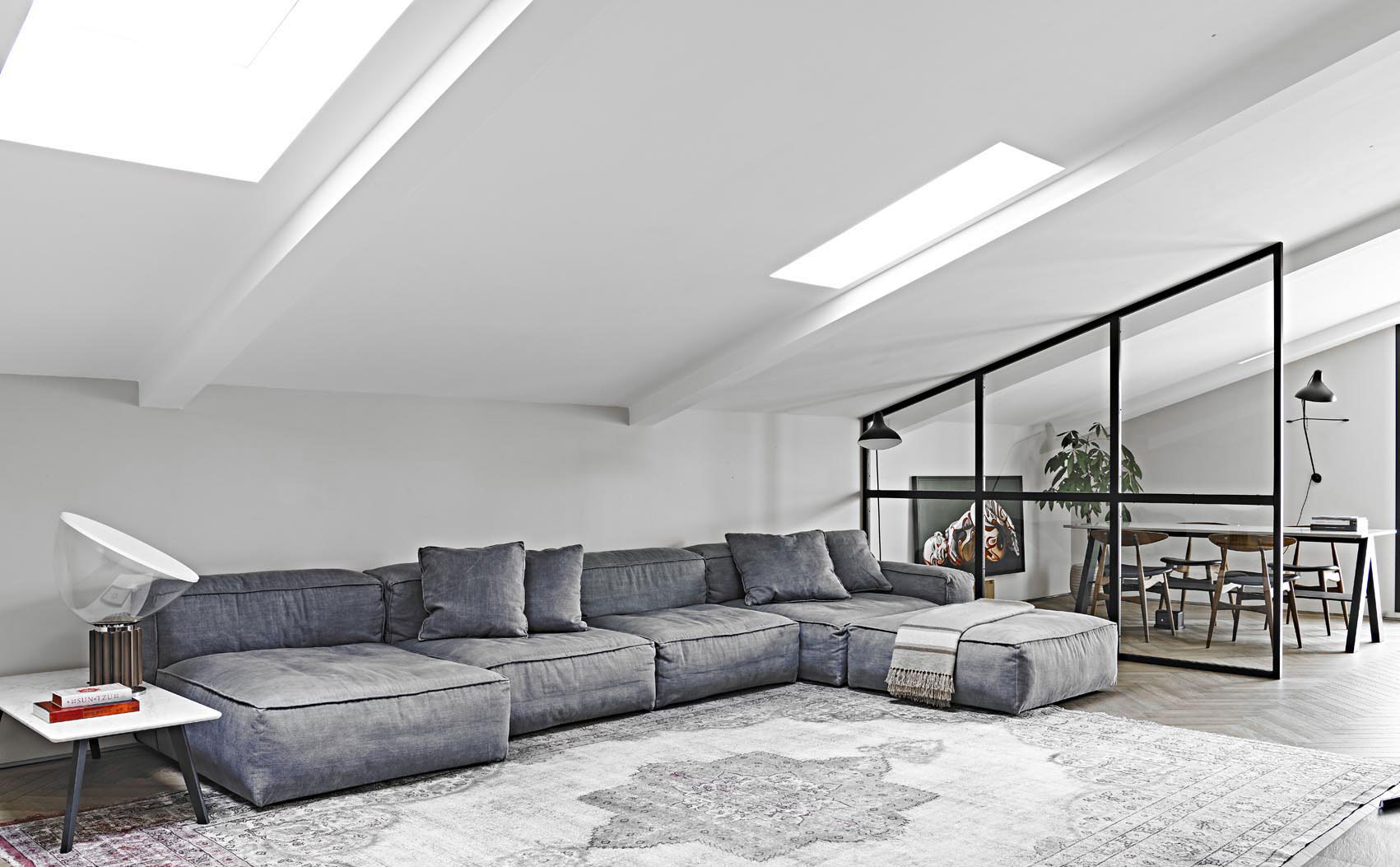
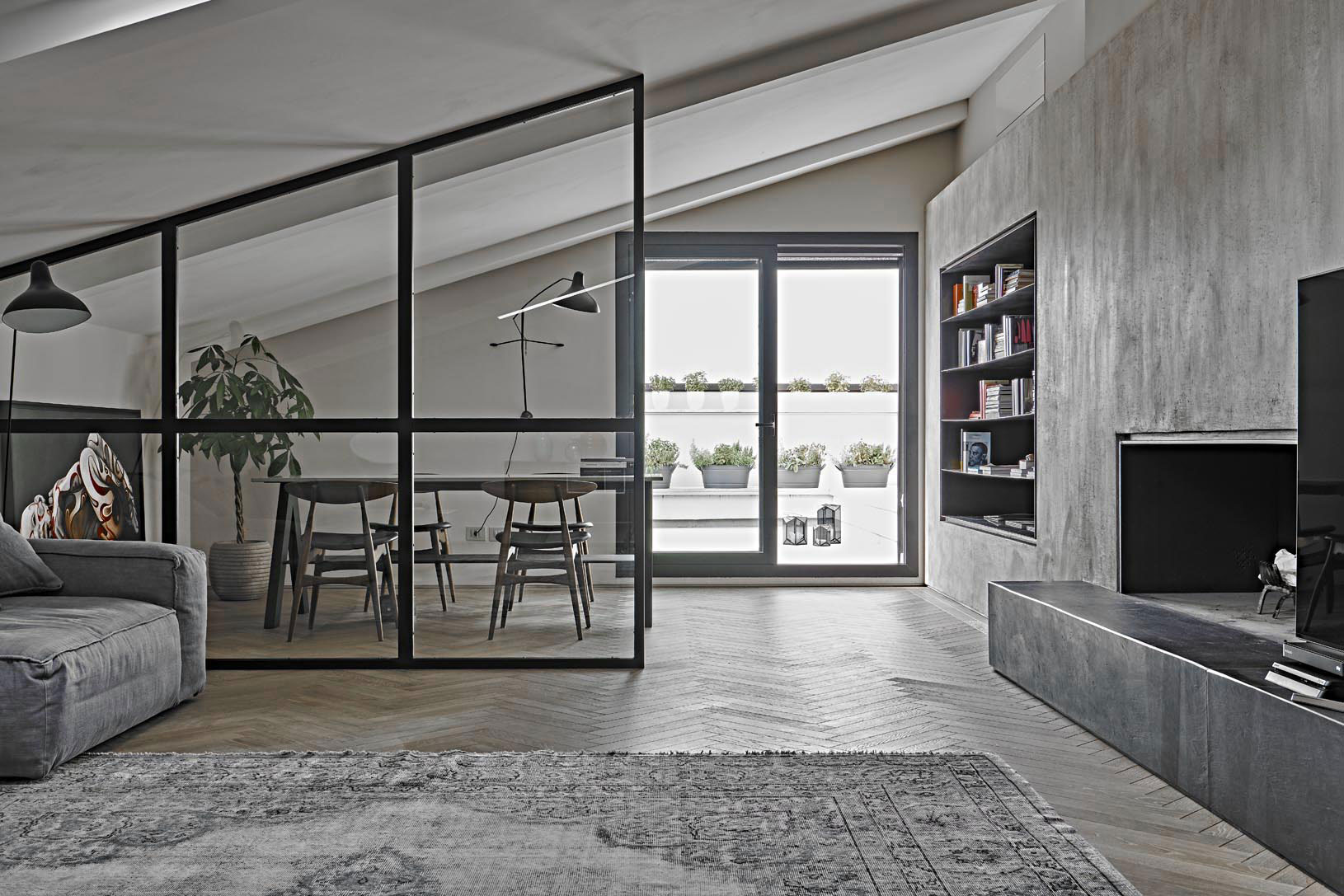
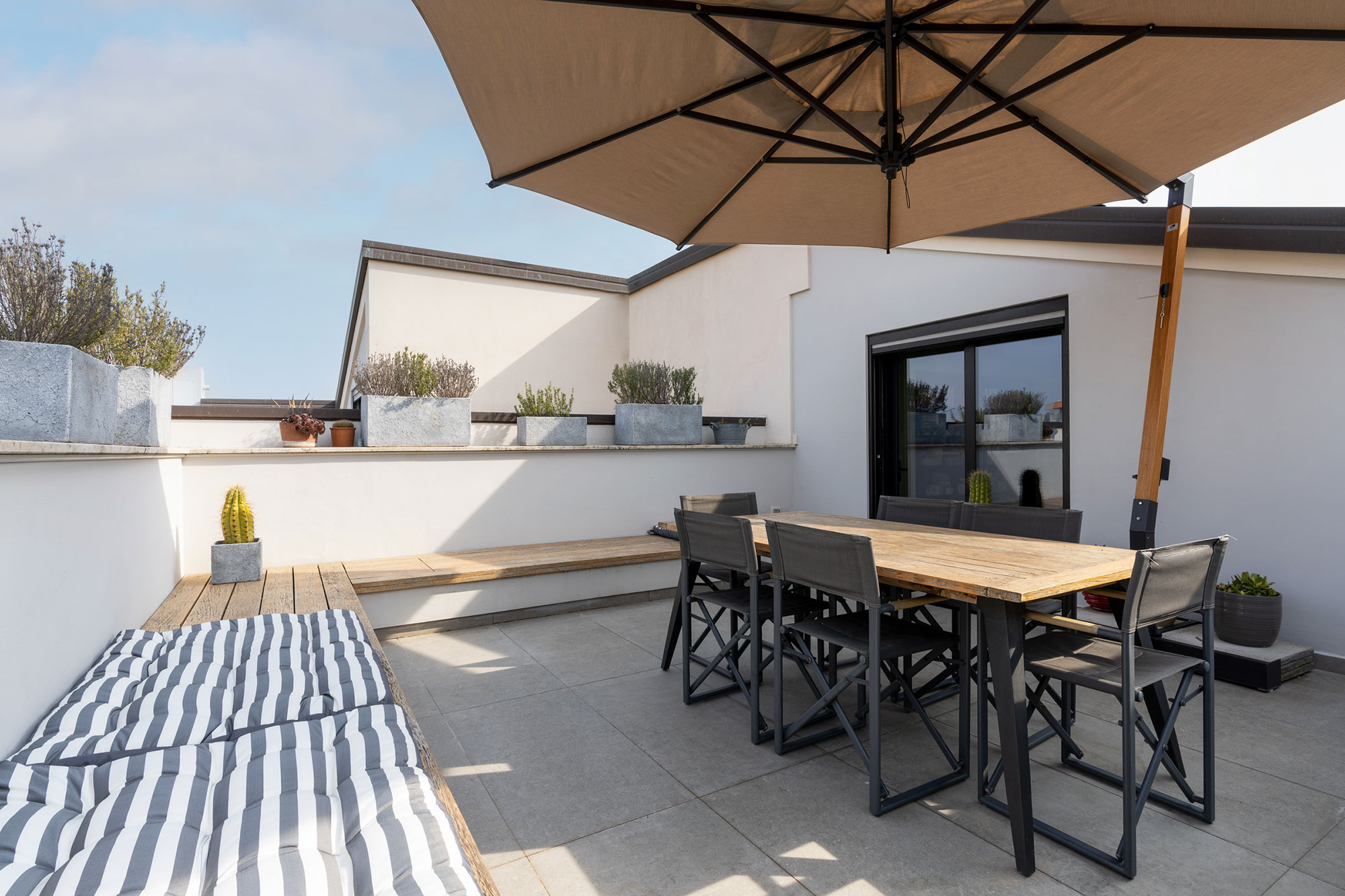
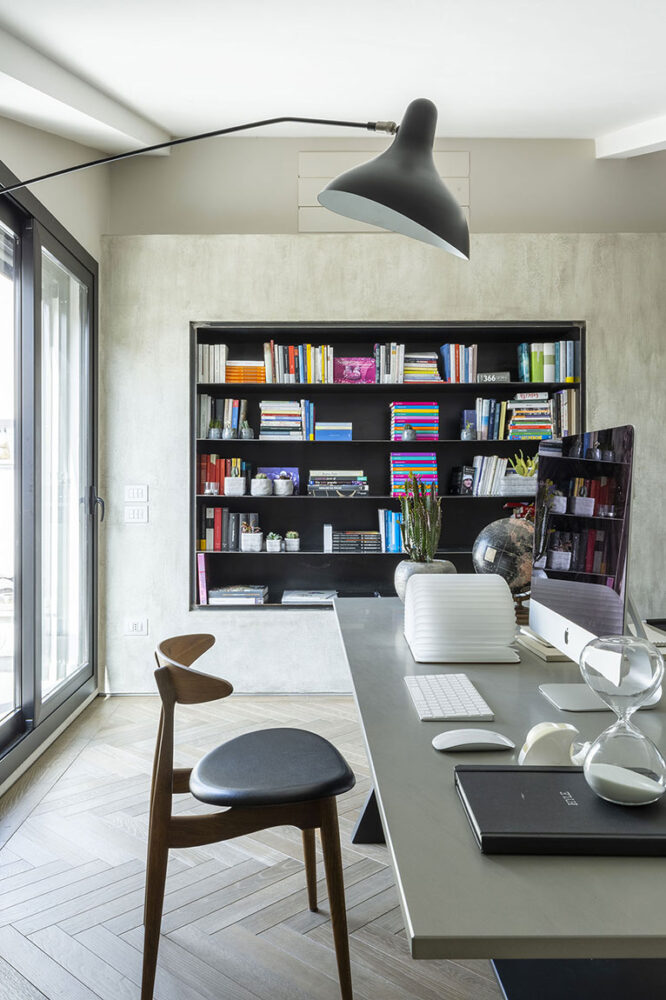
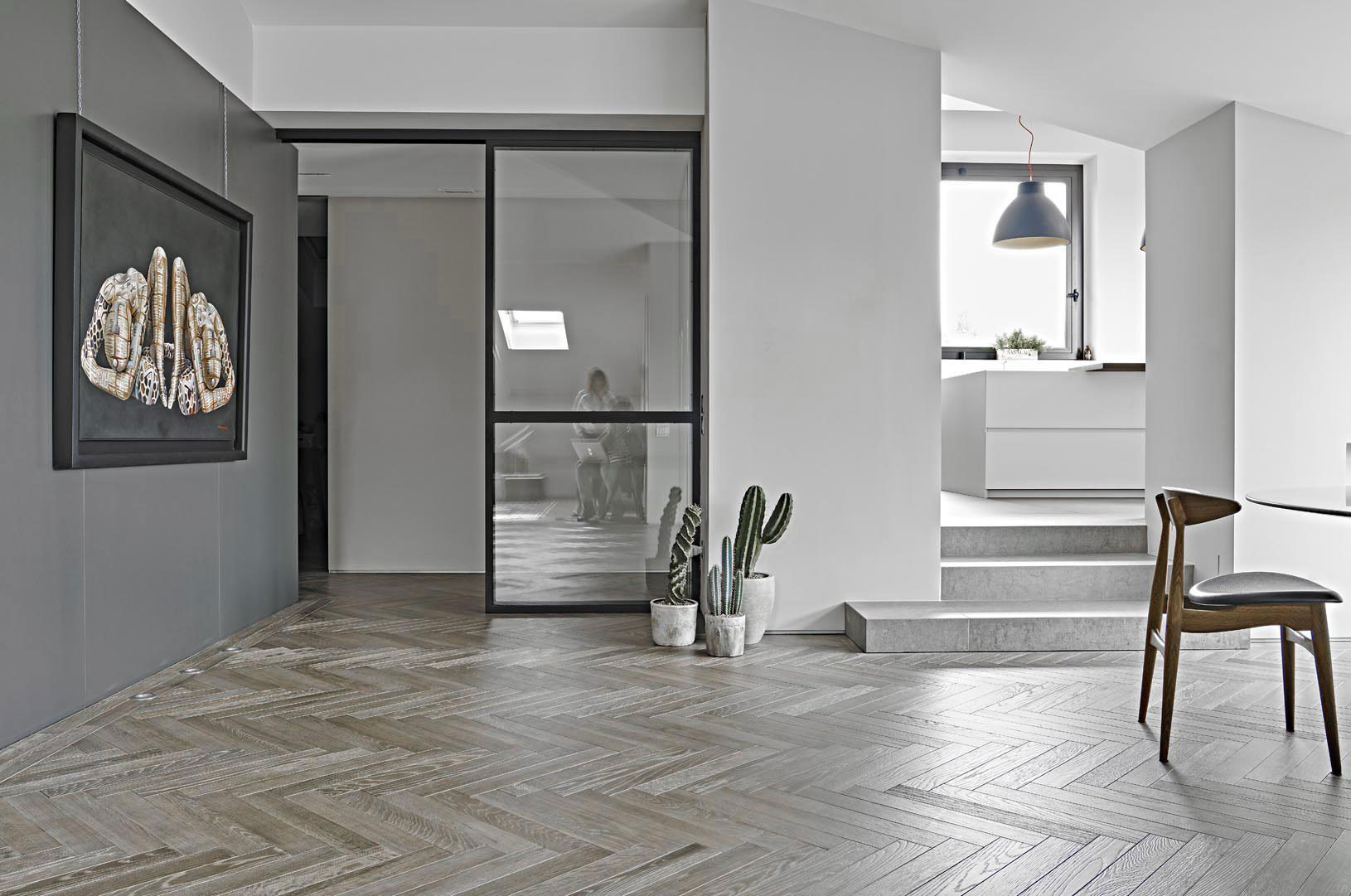
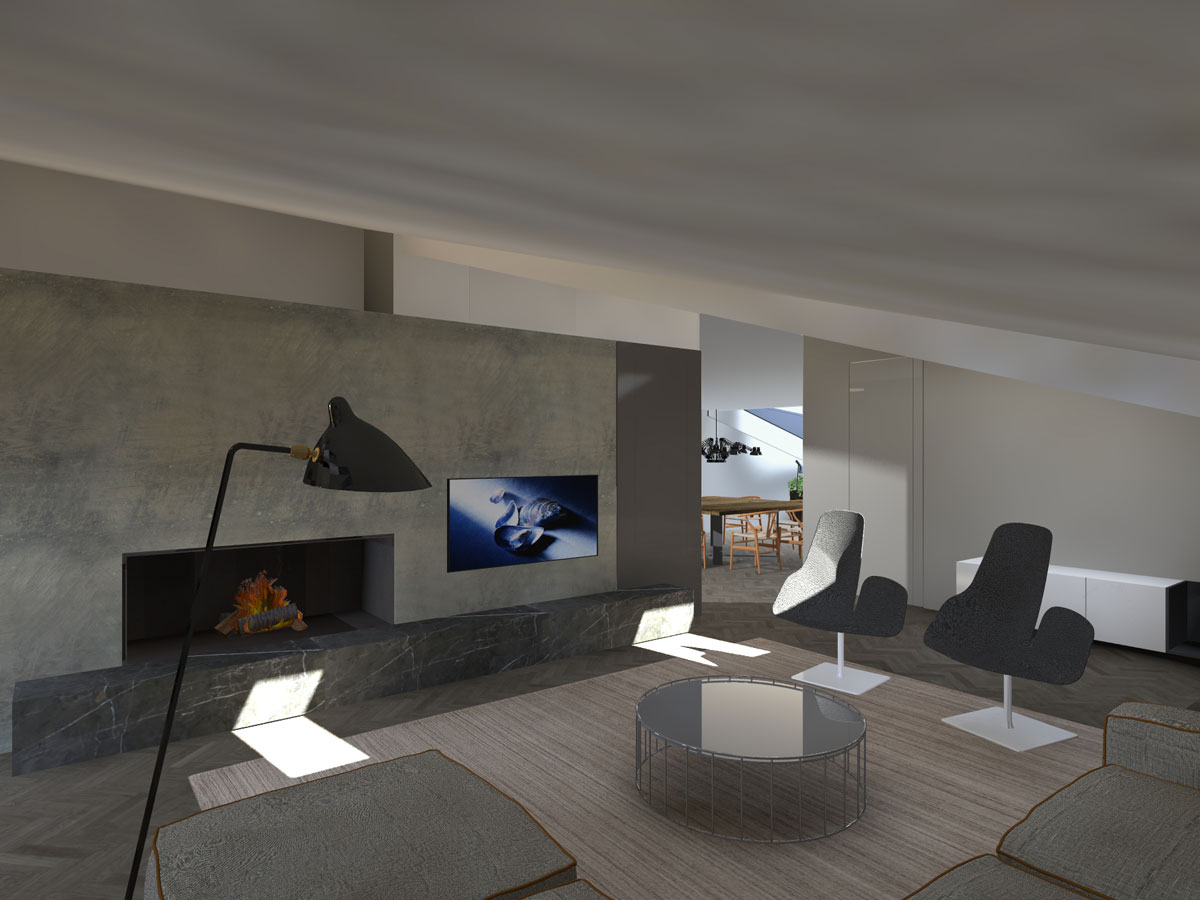
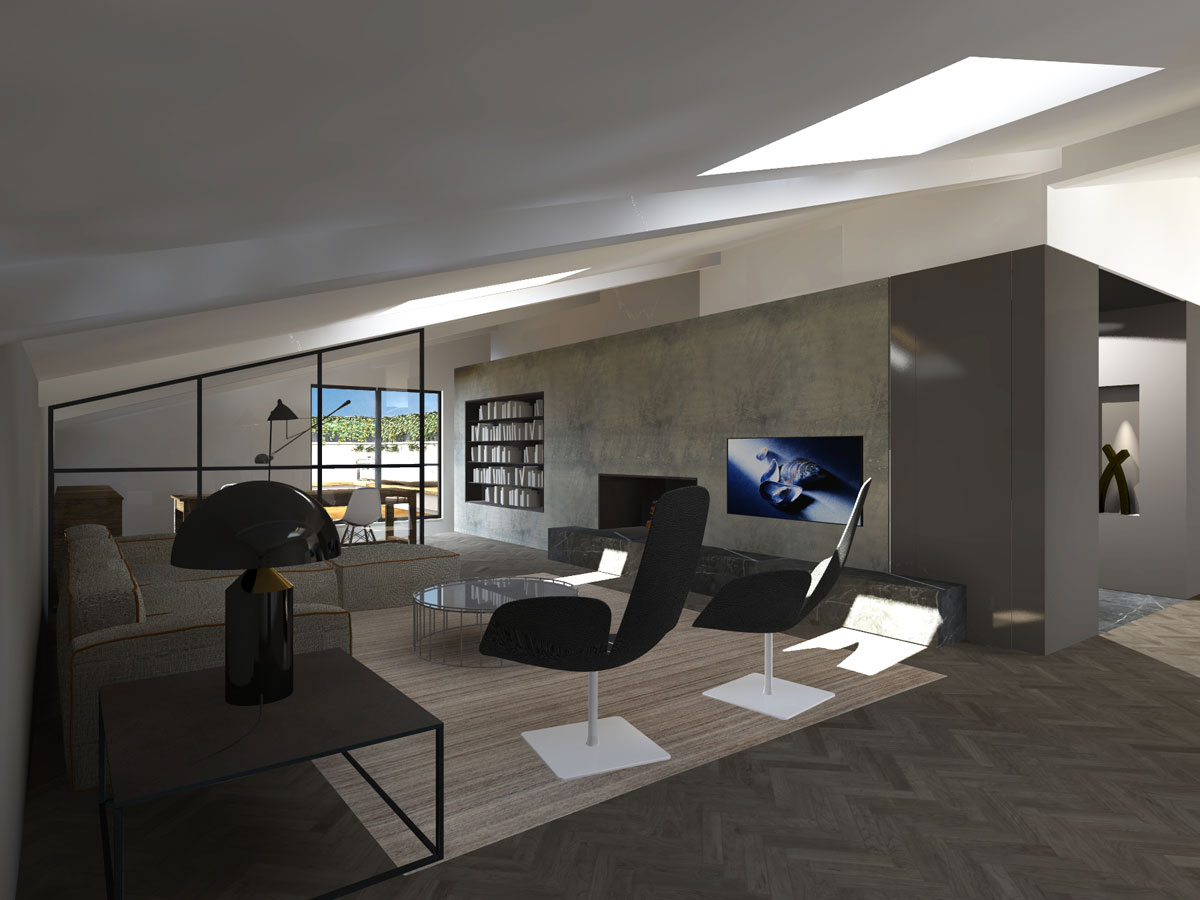
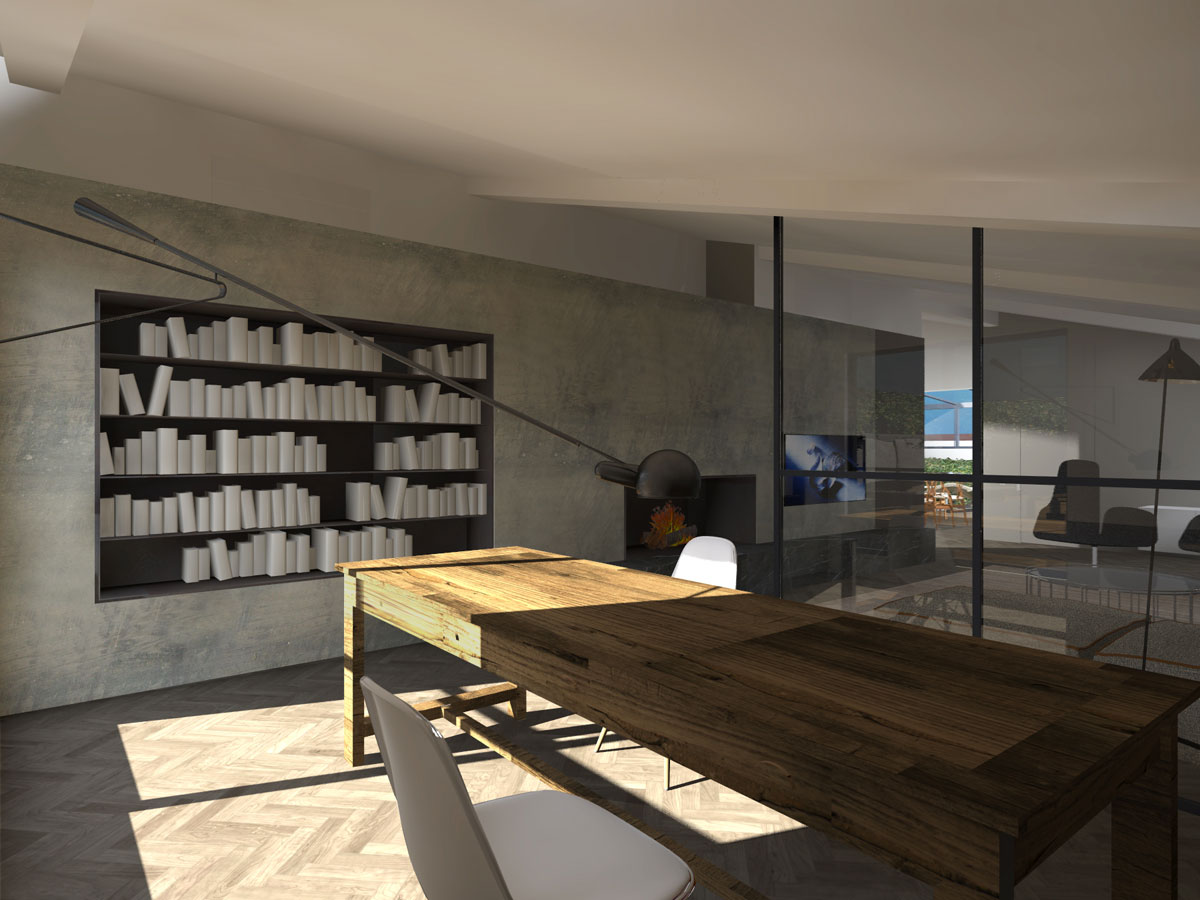
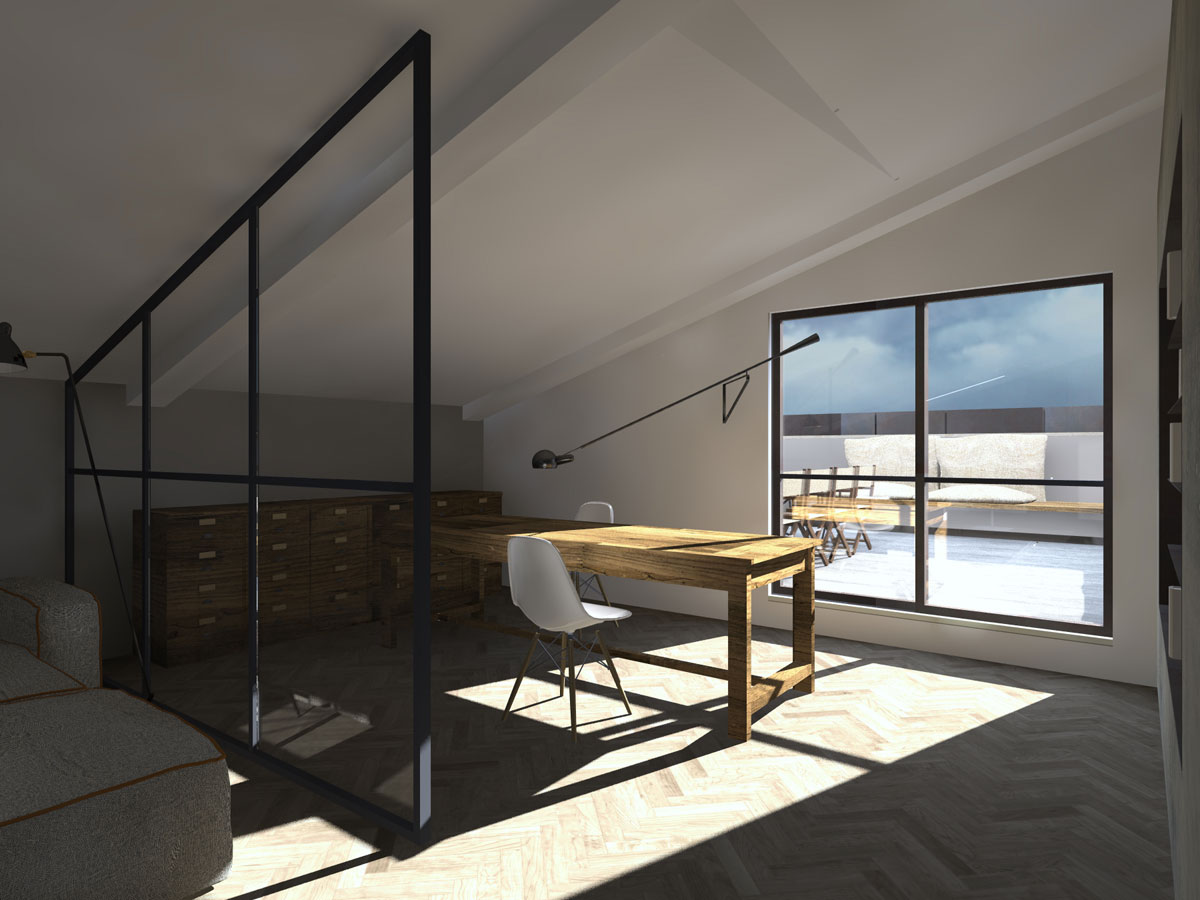
The living area leads to a wide living room and then seamlessly flows into the study, located beyond a glazed door which serves more as an ideal rather than actual separation. The study can also be accessed from the wide terrace, which provides a delightful setting particularly during warm seasons.
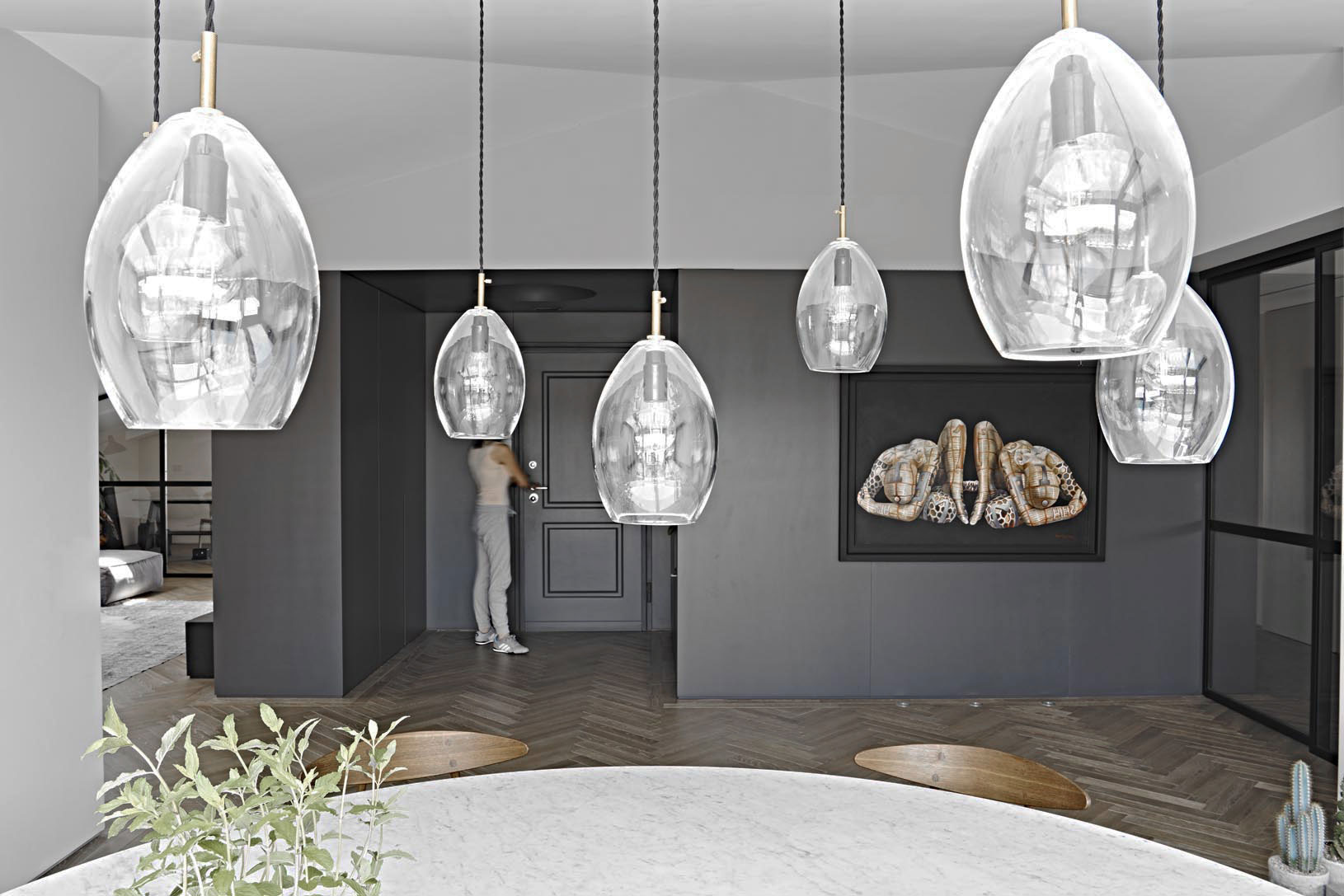
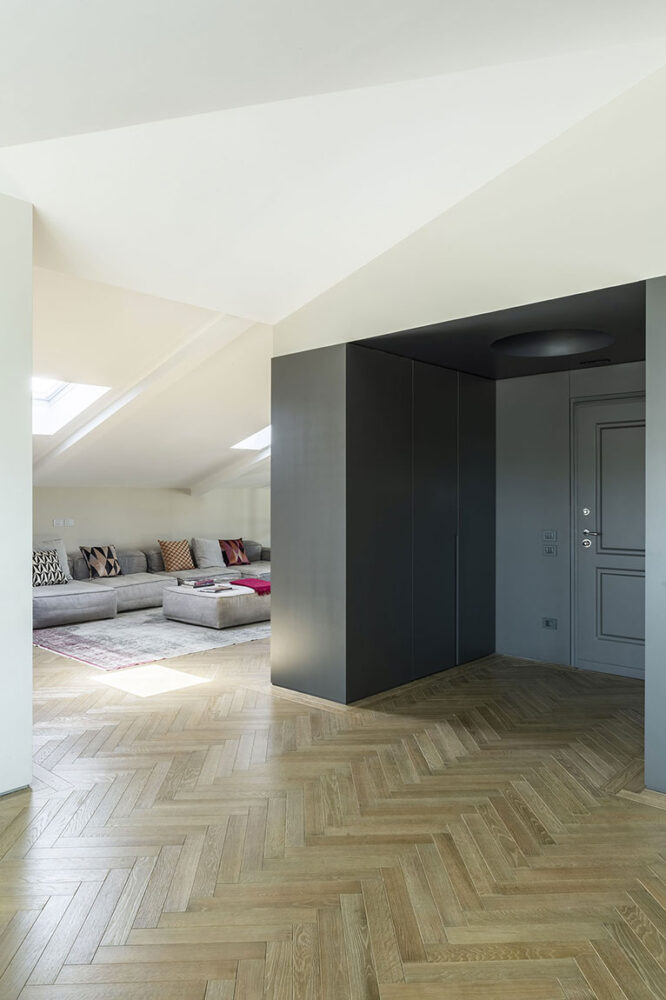
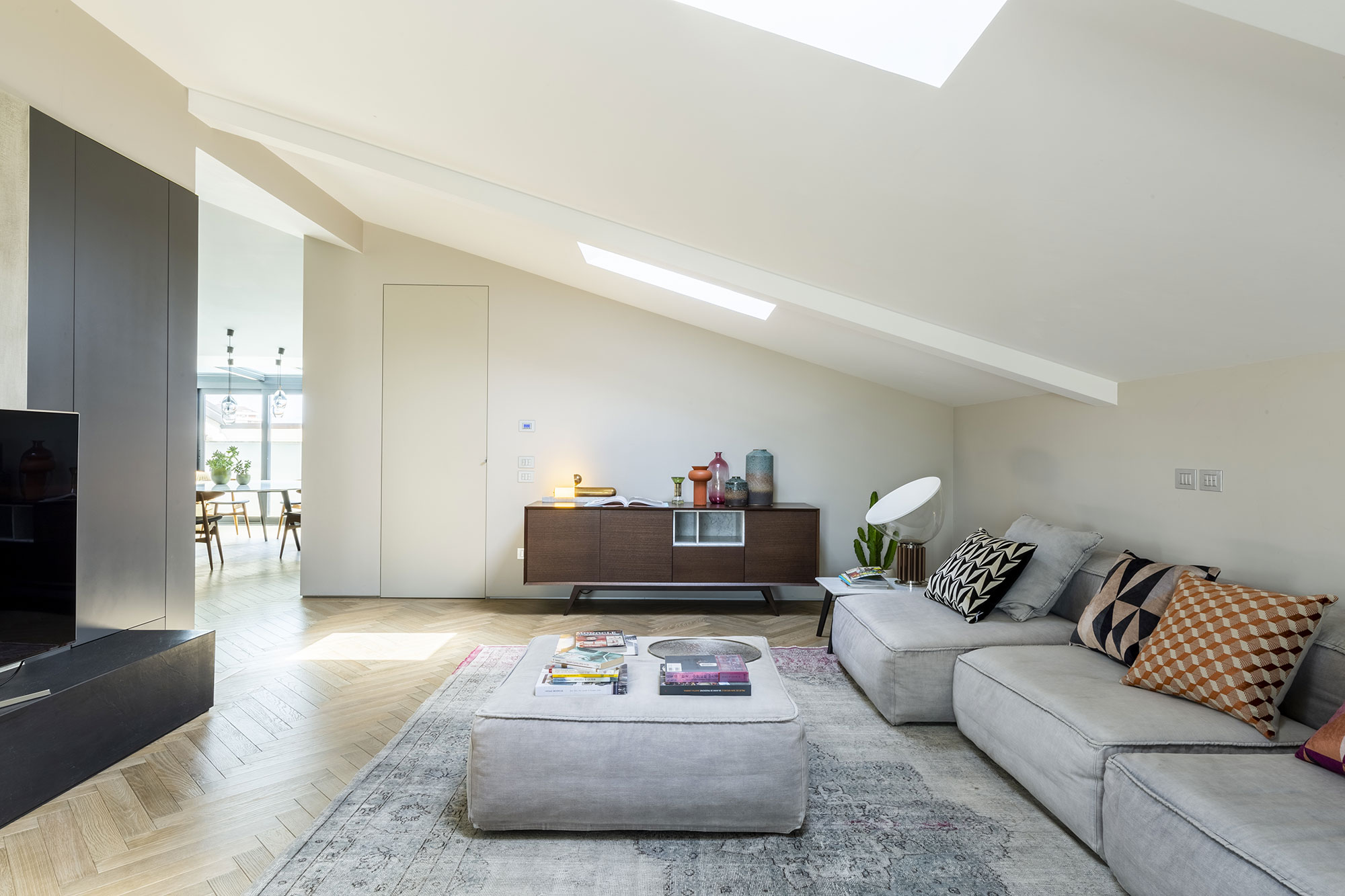
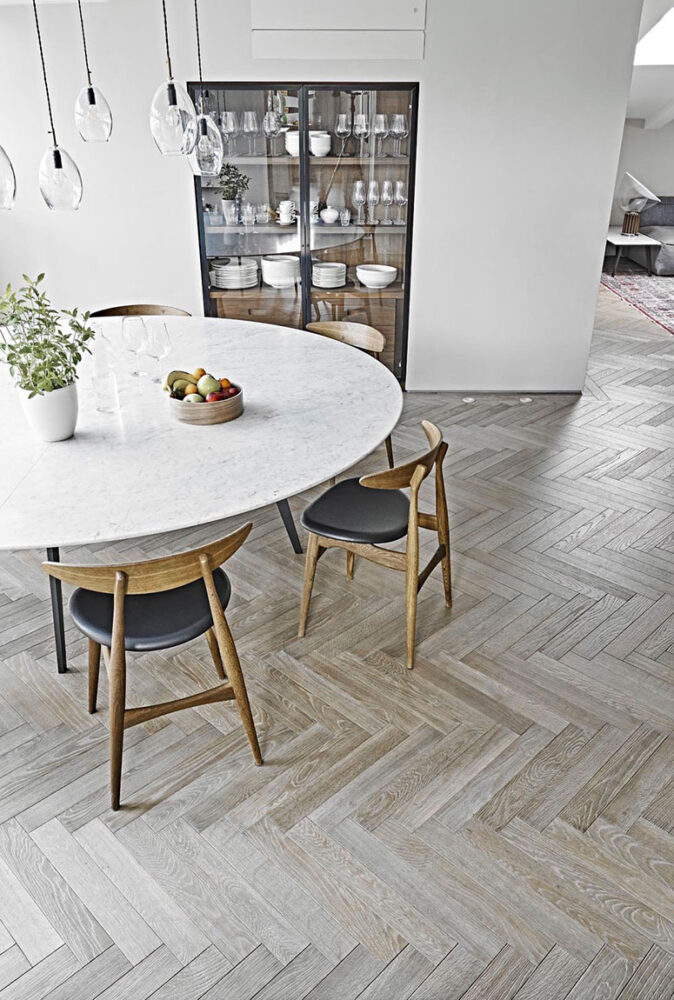
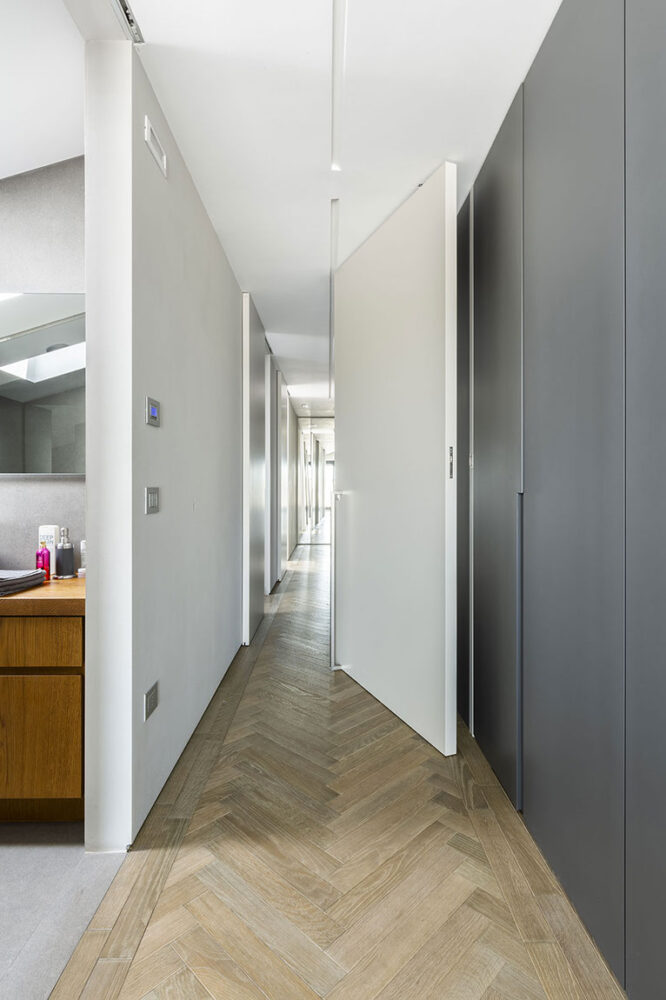
The living area presents an open-plan structure, which is therefore free from any separations and encompasses all the above mentioned features. The dark grey lacquered wooden paneling, designed according to a specific drawing, serves as a common thread to unify all the spaces, including those of the sleeping area, as well as to conceal all the cabinets. The same paneling extends into the living room, joining the concrete-effect fireplace wall. Along with the fireplace, the living room also contains a long slate bench and a natural iron bookshelf, thus creating a grey color scale which harmoniously blends with the Italian, herringbone oak parquet flooring.
Special attention has been devoted to the lightening design. As a result, barely visible point Led spotlights have been chosen and special lightening effects have been achieved by using spotlights specifically placed on the floor, as well as Led strips positioned both on the false ceiling and within the furniture, thus conveying respectively horizontal and vertical shafts of light.
The chosen design lamps exert a dramatic effect and perfectly suit the general ambience of the house.
The dining room is focused around a custom table, consisting of an iron frame and a Carrara marble top, which is surrounded by chairs designed by Hans Wegner.
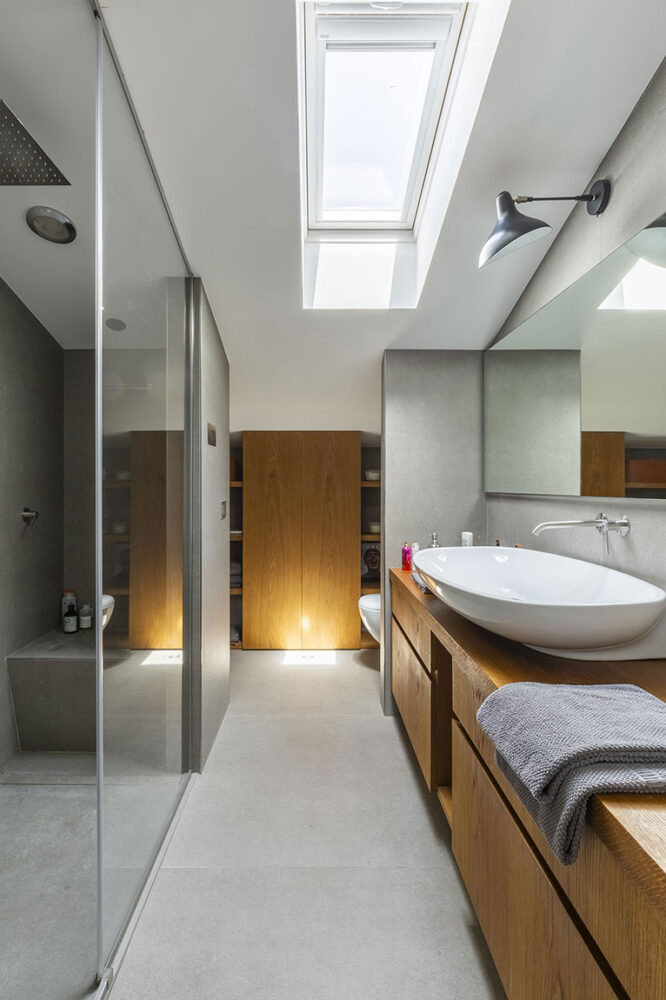
The furniture has been mainly designed by Architect Cannavicci, in order to make it an integral part of the entire architecture.