
Restoring an Umbrian Stone Farmhouse with a Contemporary Vision
Demolition, Reconstruction and Sustainable Approach
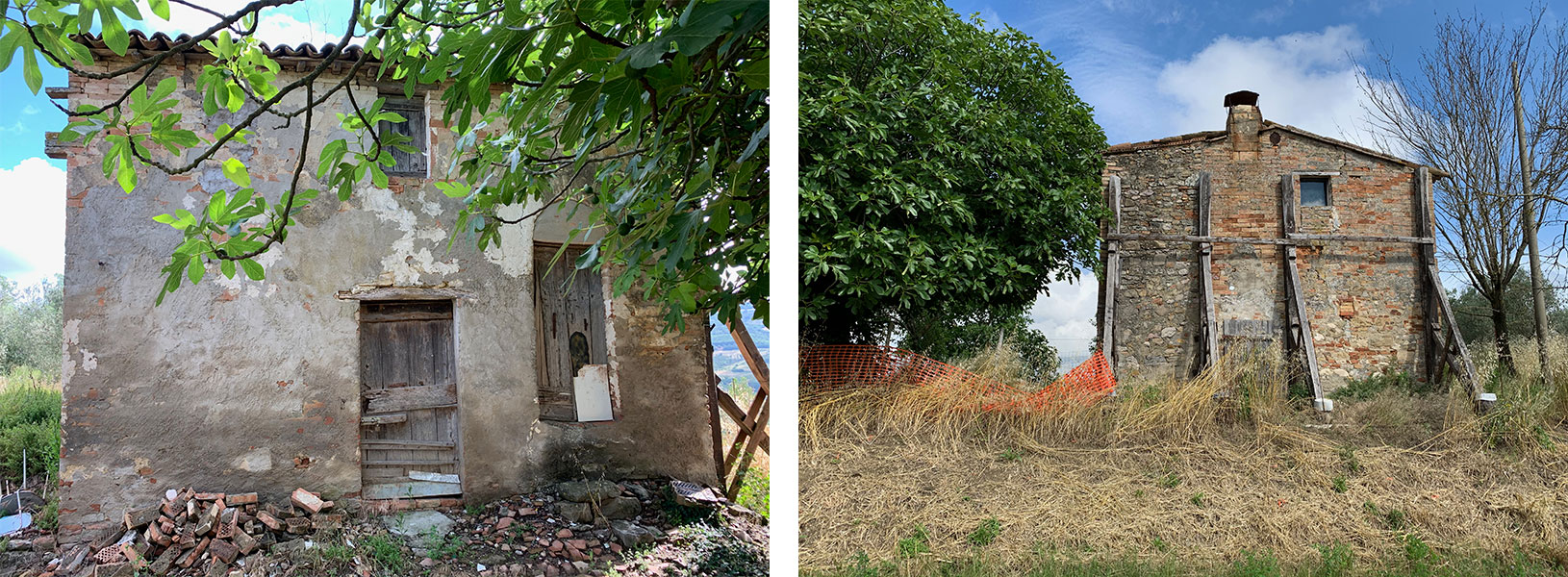
The project involved the demolition and reconstruction of two buildings in poor condition: one residential structure and one former agricultural outbuilding used for animal shelter, both dating back to the last century and holding no historical or architectural value.
A single new building volume was created, recovering the floor areas of the demolished structures and adding a 100 sqm extension. The former agricultural annex was converted into residential use, and a 40 sqm solar greenhouse was built.
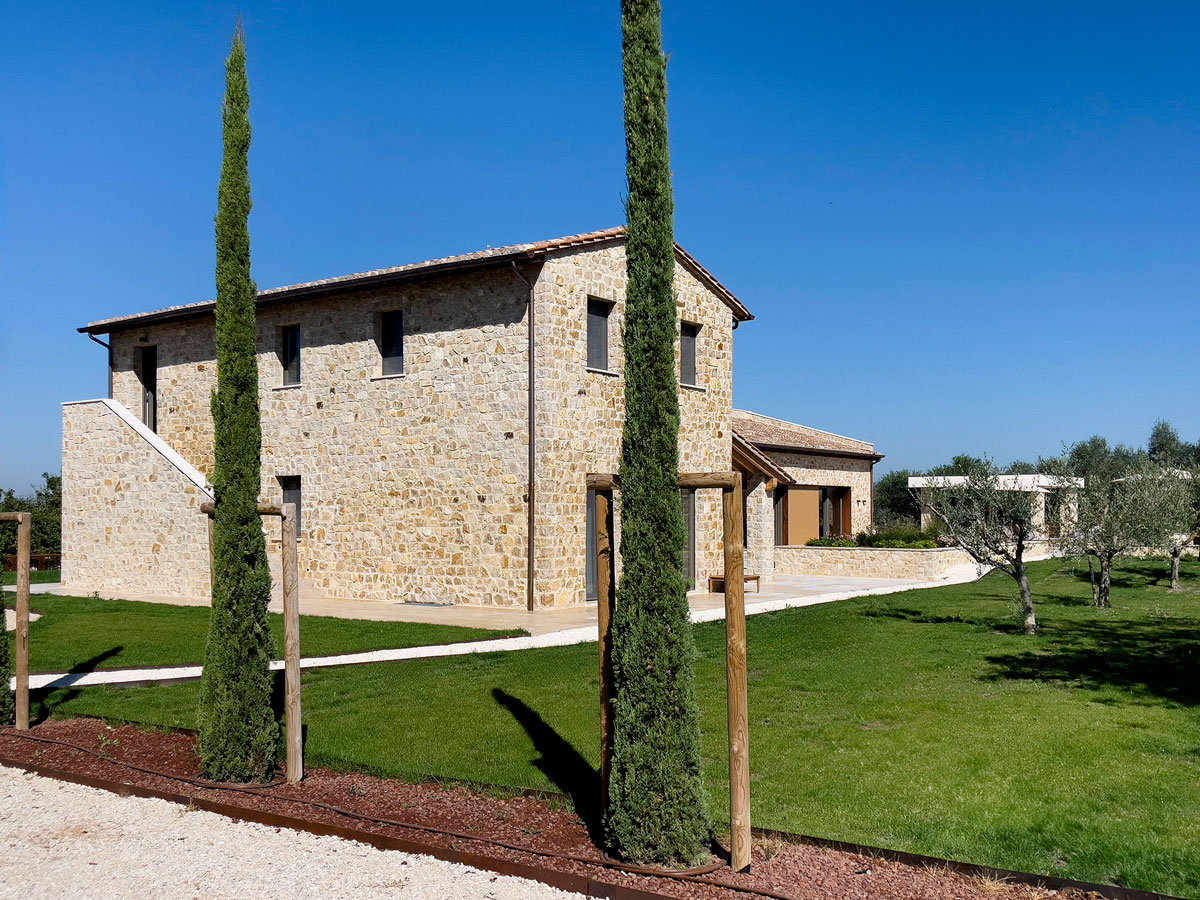
Architectural Layout and Outdoor Spaces
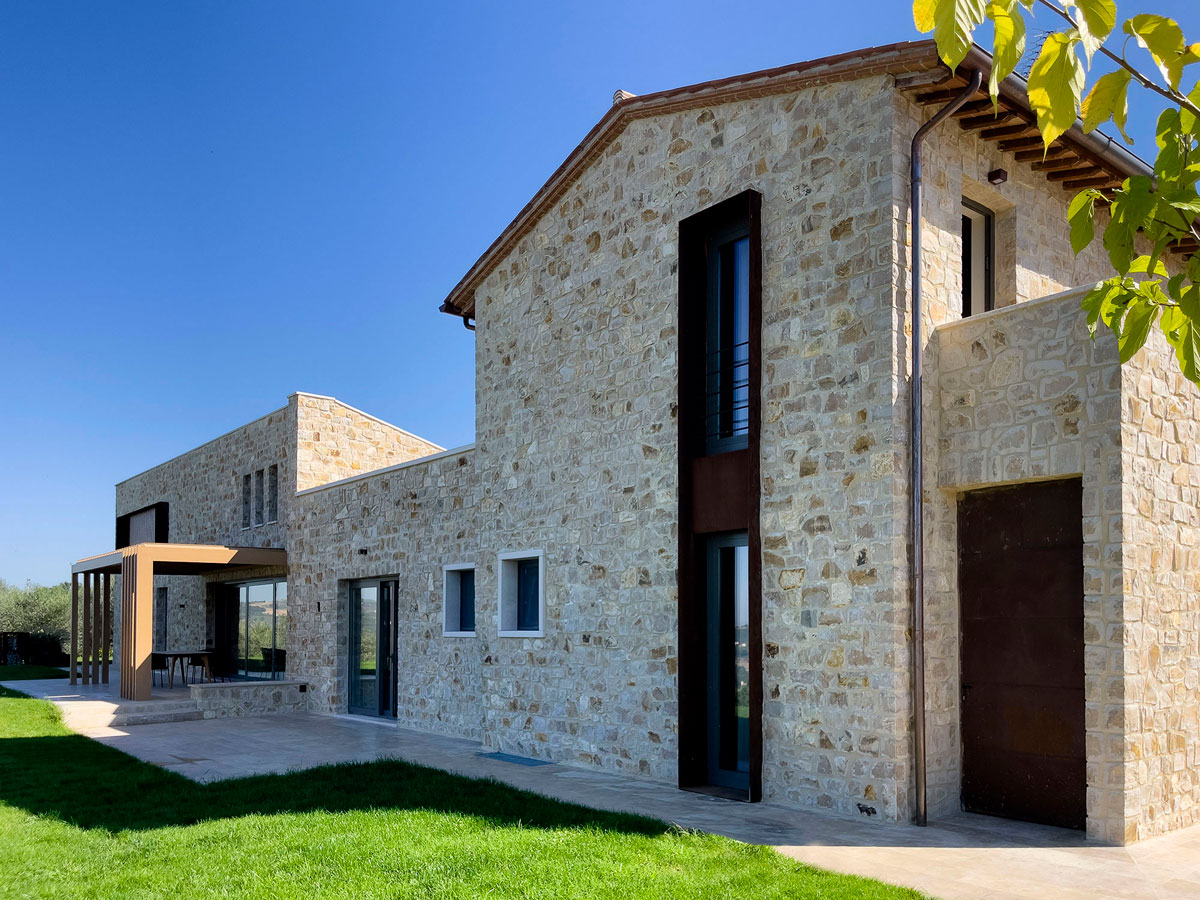
The new building, designed as holiday apartments, consists of a main two-story volume covered by a traditional gable roof, alongside a single-story lateral block with a flat roof used as a terrace for the first-floor apartment, accessible via an external staircase.
The remaining volume features a single-pitched roof and accommodates two additional apartments, separated by a solar greenhouse. This space offers panoramic views through large glazed openings on both sides of the hillside and includes a large fireplace to enhance a sense of conviviality among guests.
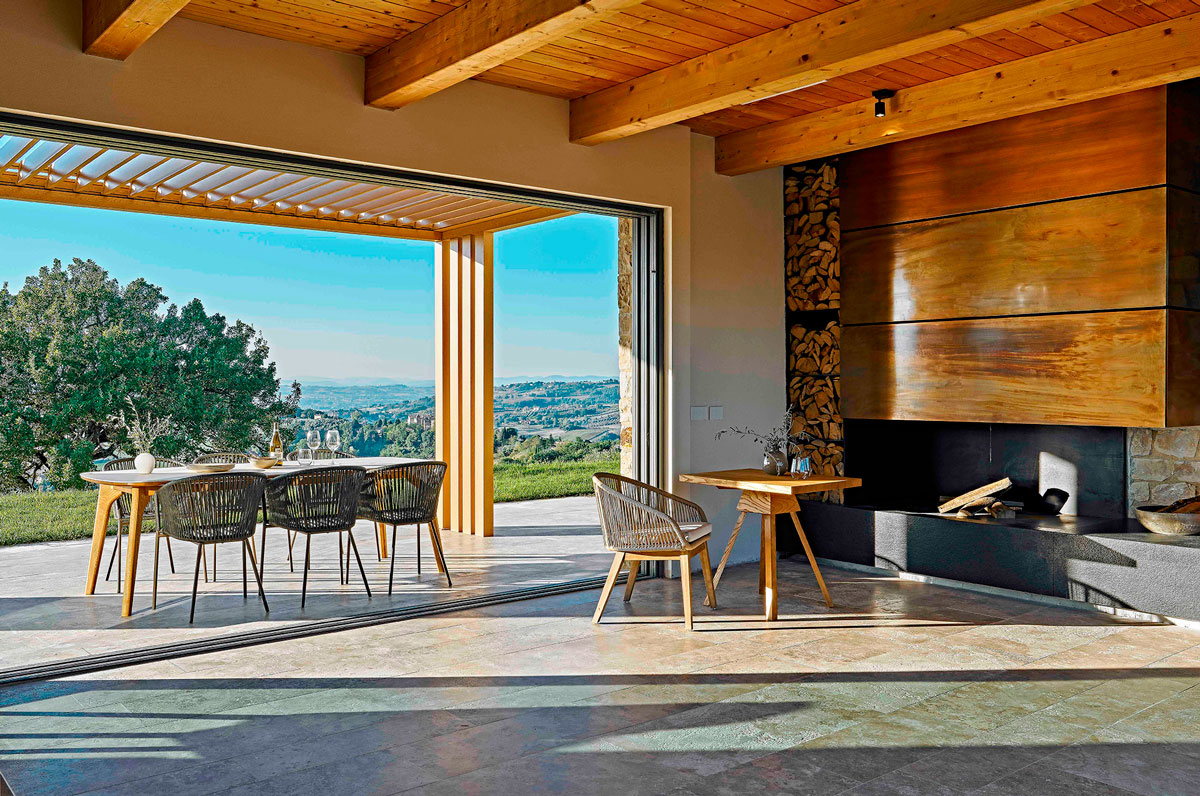
Small private outdoor areas were created for each apartment, with wooden pergolas providing shaded spaces.
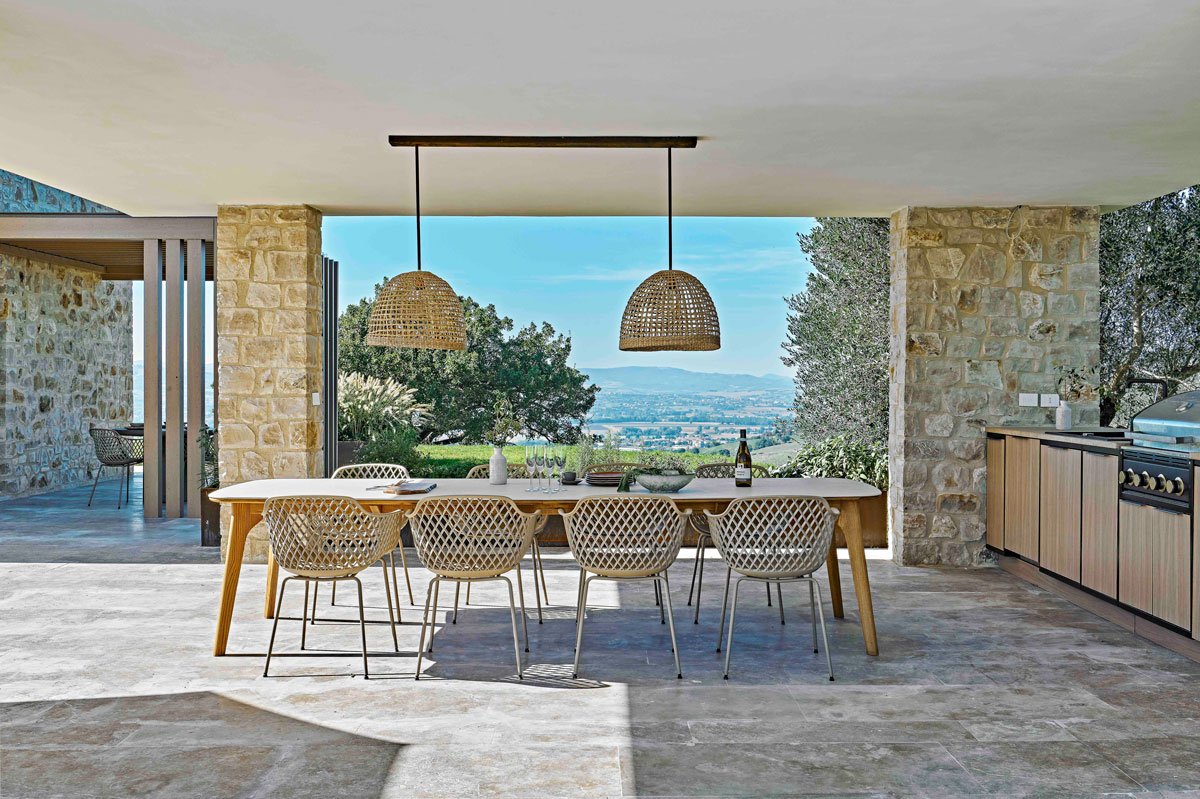
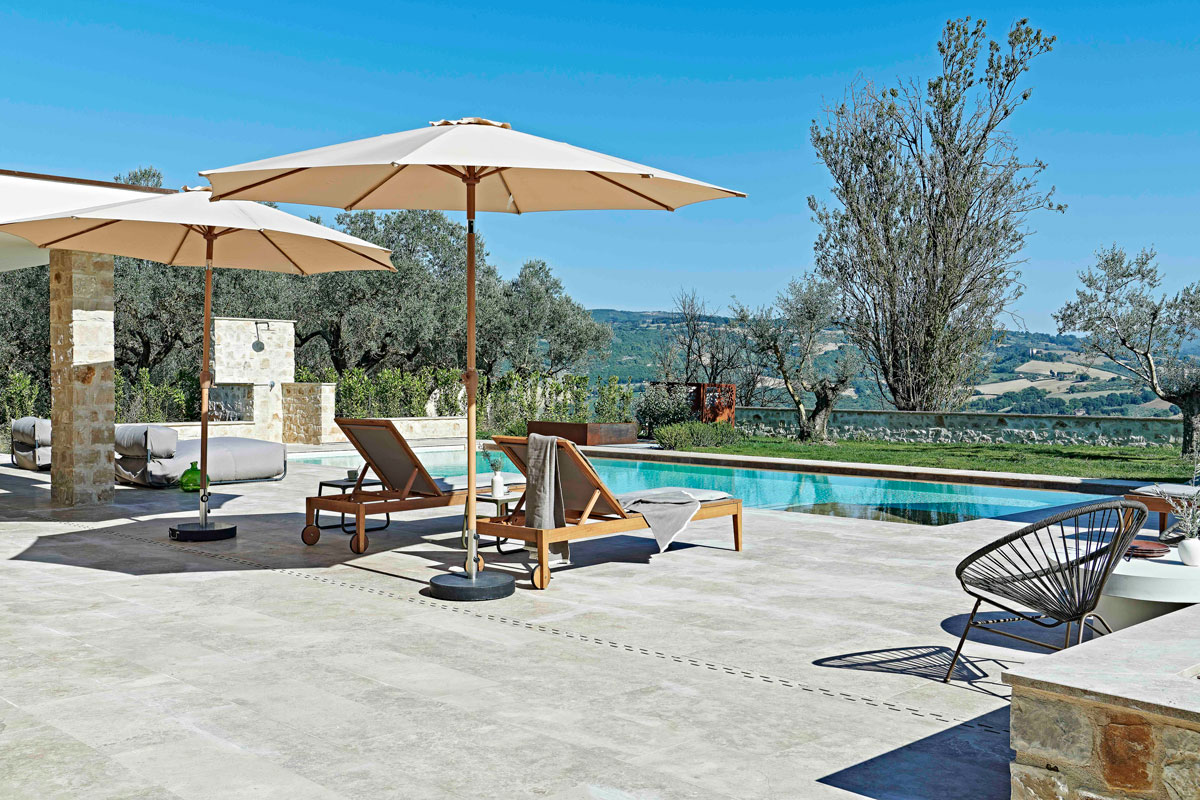
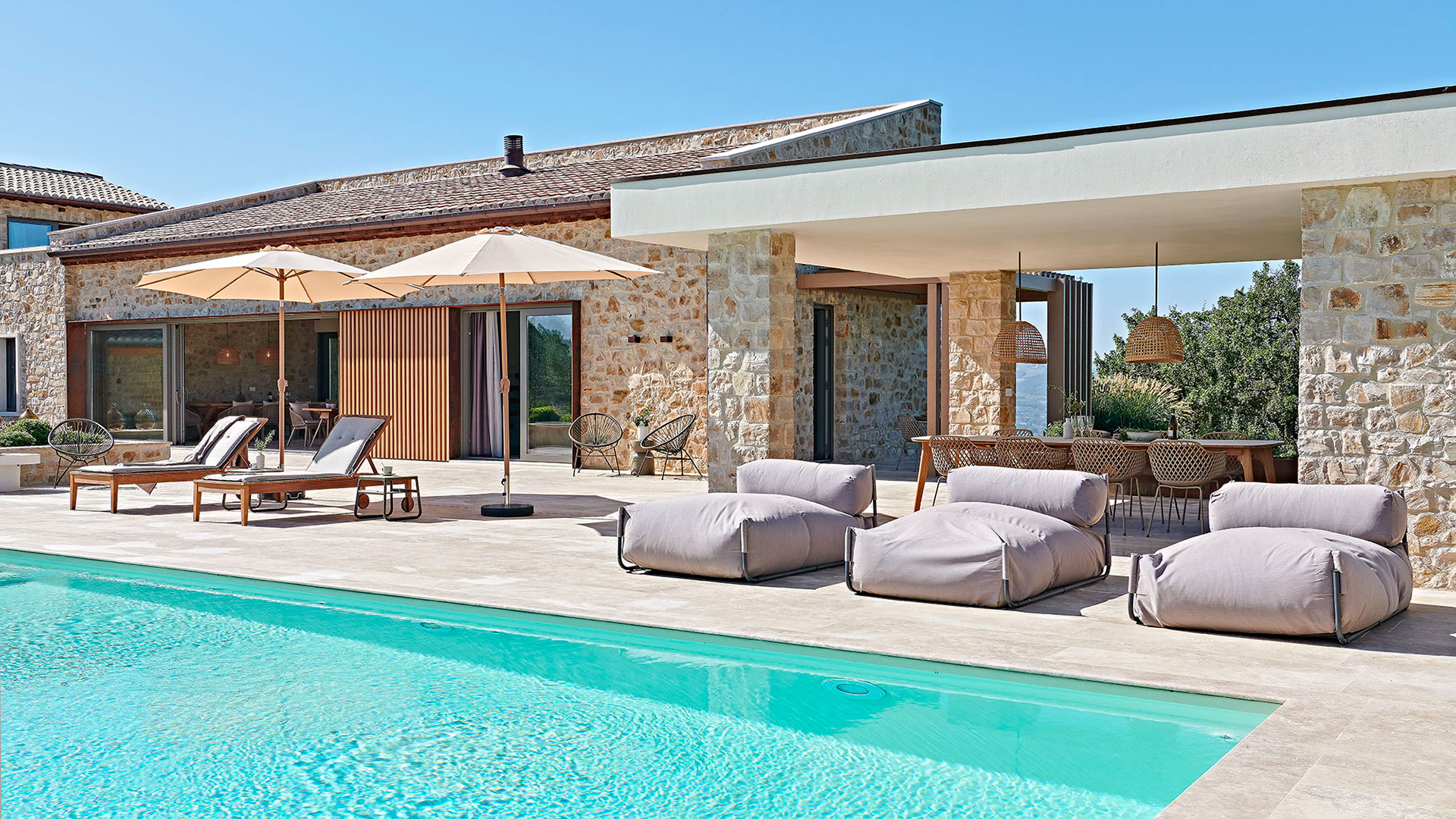
The shared areas include a spacious travertine-paved terrace, a 12-meter infinity pool, and a 30 sqm portico with an outdoor kitchen, allowing guests to dine by the pool.
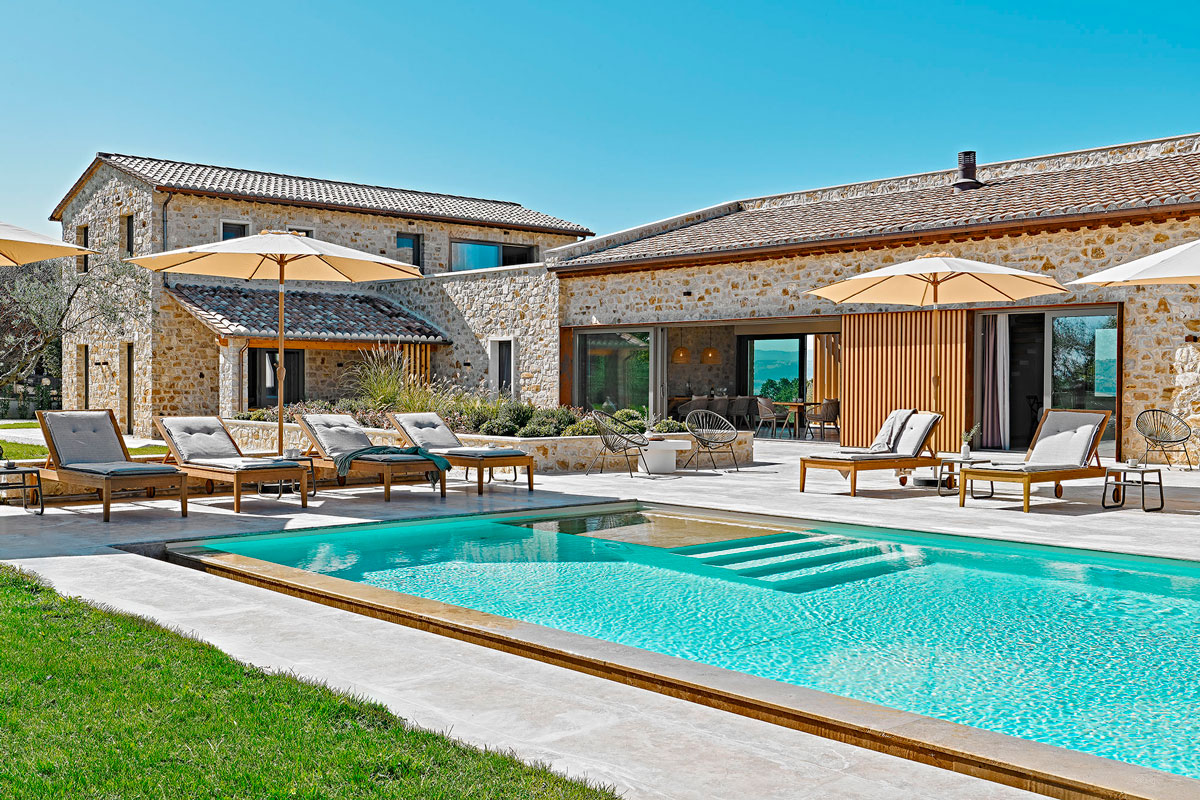
Landscape Integration and Sustainability
The design intent was to create an intervention that integrates harmoniously into the Umbrian landscape, using traditional materials enriched with contemporary elements such as Corten steel window frames and wooden screens. These features define the project in the present day, ensuring a clear distinction between what is historically authentic and what, while referencing traditional architecture, belongs to our time.
Great attention was given to sustainability: rainwater collected from the roofs is stored in three cisterns and reused for irrigation, while photovoltaic panels with storage batteries were installed on the roof of the portico adjacent to the pool to generate electricity.
Existing olive trees and tall trees were largely preserved to integrate the building into the surrounding landscape, complemented by newly planted cypress trees and a new olive grove at the rear of the property.